A spill on the sofa never happens when you have time to deal with it. It happens during movie night, when guests are over, or right before you head out the door. That is why knowing the best sofa stain removers matters – not just for looks, but for protecting upholstery you paid good money for.
The right cleaner depends on the fabric, the stain, and how long it has been sitting. A product that works well on a synthetic microfiber couch can leave water rings on delicate upholstery or set certain stains deeper if used the wrong way. If you want the best result, start with the basics: blot fast, check the care tag, and use the mildest effective option first.
How to choose the best sofa stain removers
Before you reach for any bottle under the sink, check the manufacturer cleaning code on your sofa. Most upholstered furniture includes a tag with a code such as W, S, WS, or X. W means water-based cleaners are generally safe. S means use solvent-based products only. WS allows either. X usually means vacuuming only and professional cleaning is the safer route.
This step matters more than people think. Many stain problems get worse because the cleaner was stronger than the stain required, or simply wrong for the fabric. Cotton blends, velvet, linen, and performance fabrics all react differently. If you are not sure what the upholstery can handle, spot test in a hidden area first and let it dry fully.
The best sofa stain removers also need to match the type of mess. Food oils, pet accidents, coffee, makeup, and ink each behave differently in fabric fibers. Some respond well to a mild dish soap solution. Others need an enzyme cleaner or a solvent-based upholstery product. There is no single product that is perfect for every couch and every stain.
Best sofa stain removers by stain type
1. Clear dish soap and warm water for fresh food and drink spills
For many recent stains, especially coffee, juice, light sauce, or dirt tracked in from outside, a small amount of clear dish soap mixed with warm water is a strong first move on W or WS fabrics. It is mild, easy to control, and less likely to damage the upholstery than heavy-duty spot removers.
Use a clean white cloth, blot rather than scrub, and work from the outside of the stain inward. Too much water is often the real problem, so keep your cloth damp, not soaked. This method is simple, but it does have limits. It is not ideal for grease-heavy stains or for fabrics marked S or X.
2. Enzyme cleaners for pet stains and odor
If the issue is urine, vomit, or another organic stain, enzyme cleaners are often among the best sofa stain removers because they address both the visible mark and the odor source. That is important in homes with pets, where a lingering scent can lead to repeat accidents.
The trade-off is time. Enzyme products usually need to sit long enough to break down the stain properly, and they must be used according to the label. Rushing the process can leave you with a cleaner-looking cushion that still smells off when the room warms up.
3. Upholstery foam cleaners for general fabric refreshes
Foaming upholstery cleaners can be useful for older mystery stains or broad traffic marks on armrests, seat cushions, and head areas. Because foam sits more on the surface than liquid-heavy cleaners, it can reduce the risk of overwetting when used correctly.
These products work best when the stain is not deeply set and the fabric can tolerate the formula. They are a practical middle ground for people who want more cleaning power than soap and water without jumping straight to professional service. Still, heavy buildup, dark transfer stains, and repeated spills may need stronger treatment.
4. Rubbing alcohol for ink on some synthetic fabrics
Ink is one of the most frustrating sofa stains, but on certain synthetic materials, careful dabbing with rubbing alcohol can help lift it. The key word is careful. Pouring alcohol directly onto the fabric can spread the stain and affect dyes.
Apply a small amount to a cloth or cotton swab, blot gently, and rotate to a clean section as the ink transfers. This method can work well, but it is not universal. On delicate fabrics or colored upholstery, it can create a bigger problem if not tested first.
5. Dry-cleaning solvent for S-code upholstery
If your sofa has an S cleaning code, dry-cleaning solvent is usually the safer option. Water-based methods can leave rings, cause shrinkage, or distort the fabric texture. Solvent-based upholstery cleaners are designed for these situations and can be very effective on oily stains, body oils, and some cosmetic marks.
Ventilation matters here. These products can have a stronger odor and should be used sparingly. For large stains or indoor spaces with limited airflow, professional upholstery cleaning is often the more practical and safer call.
6. Baking soda for odor and light oil absorption
Baking soda is not a complete stain remover, but it earns its place because it helps absorb odors and light surface oils before they settle deeper. If someone drops greasy food on the sofa, sprinkling baking soda over the area after blotting can help pull up residue.
It works best as a support step, not the whole solution. After allowing it to sit, vacuum thoroughly and then use the appropriate cleaner for the remaining stain. On textured fabrics, make sure all powder is removed so it does not stay trapped in the weave.
7. Hydrogen peroxide for some light-colored organic stains
On light upholstery only, hydrogen peroxide can sometimes help with blood or other organic stains. This is one of those cases where effectiveness comes with real risk. It can lighten fabric, affect color consistency, or create a visible spot if used too aggressively.
If you try it, use a very small amount, test first, and avoid dark or richly dyed furniture. For many homeowners, this falls into the category of possible but not always wise.
8. Commercial grease removers made for upholstery
Grease from lotion, hair products, or takeout food often needs more than basic soap. Upholstery-safe grease removers can break through oily residue better than homemade mixtures, especially on synthetic performance fabrics.
The best results usually come from quick action. Once oils oxidize and attract dirt, the stain gets darker and harder to lift. If the armrest or head area has gradual buildup rather than one fresh spot, a full upholstery cleaning may make more sense than repeated spot treatment.
9. Professional upholstery cleaning for set-in or delicate stains
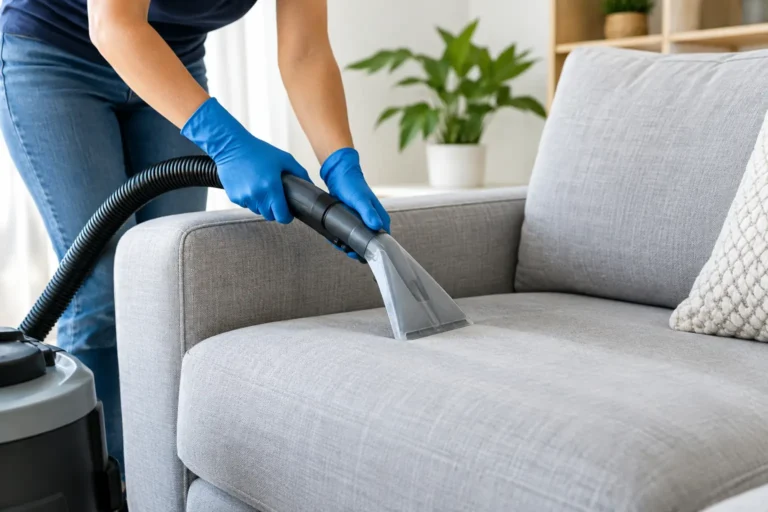
Sometimes the best sofa stain remover is not a product at all. It is a trained technician with the right tools, fabric knowledge, and extraction equipment. This is especially true for linen, wool blends, velvet, antique upholstery, large sectional sofas, or stains that have already been treated multiple times at home.
DIY cleaning can be effective, but only up to a point. Repeated attempts often spread the stain, leave soap residue behind, or create water marks that are harder to fix than the original spill. For households trying to protect a higher-end sofa, professional cleaning is often the more cost-effective choice.
Common mistakes that ruin upholstery
The biggest mistake is scrubbing. It feels productive, but it pushes the stain deeper and roughs up the fabric surface. Blotting is slower, but it protects the fibers and keeps the stain from expanding.
Using too much water is another common issue. Cushions and sofa frames do not dry as quickly as people expect, and trapped moisture can lead to odor, discoloration, or even mildew. More cleaner does not mean better results.
Mixing products is also risky. Combining stain removers, vinegar, peroxide, solvents, or fragranced household cleaners can cause fabric damage or chemical reactions you do not want inside your home. Keep the process simple and controlled.
When to stop spot cleaning and call for help
If the stain covers a large area, keeps wicking back after drying, or involves pet odor that will not go away, it is usually time to bring in professional help. The same goes for specialty fabrics and any couch with a cleaning code you do not fully understand.
For busy households, renters trying to protect a security deposit, or property managers getting a unit ready for the next tenant, speed matters. A professional upholstery cleaning service can often save time, reduce risk, and deliver a more even result than a weekend of trial and error. Companies like DMV Dream Clean are often called in at this stage because the goal is not just to lighten the stain – it is to get the sofa clean, dry, and ready to use again.
A good stain response is less about finding one miracle product and more about using the right method early. If you treat the fabric carefully, match the cleaner to the stain, and know when to stop, your sofa has a much better chance of staying in good shape for years to come.