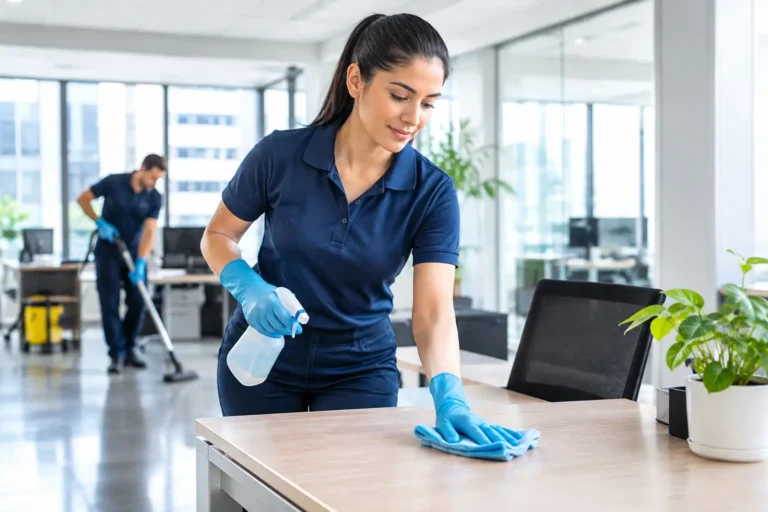
By 9:15 on a Tuesday morning, the front office carpet had already taken a hit – spilled coffee near reception, tracked-in dirt around the entry, and a dark mystery stain outside the conference room that no one wanted to claim. This office carpet stain removal case study shows what really happens when a busy commercial space needs results fast, without shutting down the workday.
In commercial settings, carpet problems are rarely about one stain. They are usually a mix of foot traffic, delayed cleanup, and cleaning attempts that only fix the surface. For property managers and business owners, the real concern is bigger: appearance, odor, safety, and how the space feels to staff and visitors.
The problem behind this office carpet stain removal case study
The office in this case was a mid-sized professional workspace with steady weekday traffic, several client-facing rooms, and carpet tile in the reception and hallway areas. Staff had noticed that certain spots kept coming back even after routine maintenance. The carpet looked dull in walkways, and a few stained sections were beginning to make the whole space look neglected.
The main trouble areas were easy to identify. There was a coffee spill near the front desk, an oily residue from a rolling office chair in one cubicle section, and a set-in stain near the break room entrance that appeared to be a mix of beverage residue and tracked moisture. On top of that, the carpet held a light but noticeable odor that became stronger in the afternoon.
This matters more than many offices realize. Stained carpet does not just affect appearance. It can shape first impressions, hold onto odors, and create a sense that the space is not being maintained. In workplaces that welcome clients, tenants, or patients, those details are not minor.
Why office stains are harder than they look
Office carpet cleaning is different from cleaning carpet in a home. Commercial carpet often faces heavier traffic, tighter cleaning windows, and a wider mix of soils. One section may have food and drink spills, while another has copier toner dust, soil from entryways, or residue from janitorial products.
That is why stain removal is rarely a one-size-fits-all job. Coffee, grease, ink, and tracked grime respond differently to treatment. If the wrong product is used, the stain can spread, wick back to the surface, or become permanently altered. Even a well-meaning spot treatment from an employee can make professional removal more difficult later.
Timing also affects the outcome. Fresh spills are usually easier to correct. Older stains that have dried into the fibers or padding require more targeted treatment and realistic expectations. In some cases, the goal is full removal. In others, the right result is a major improvement that restores the carpet’s overall appearance without promising the impossible.
The inspection and treatment plan
The first step in this office carpet stain removal case study was a full walk-through of the affected areas. Instead of treating every mark the same way, each stain was evaluated by type, age, and location. That matters because reception carpeting, hallway lanes, and workstation carpet all wear differently.
The coffee spill was a likely tannin stain, which meant it needed a specific approach rather than a general cleaner. The chair-area residue suggested embedded soil and oily buildup. The break room stain had signs of repeated spotting attempts, which often leaves detergent residue behind. That residue can attract more dirt, making the area look worse over time.
A treatment plan was built around three goals: remove or reduce visible staining, lift embedded soil from traffic areas, and leave the carpet clean enough to dry quickly so the office could keep operating. In a commercial setting, that balance matters. Aggressive cleaning can help in some situations, but if it leaves carpet too wet for too long, it creates another problem.
What the cleaning process looked like
Targeted pre-treatment came first. Each stain received the appropriate spotting solution based on what was found during inspection. This step is where experience shows. Using the right chemistry in the right amount helps break down the stain without damaging the carpet fibers or leaving heavy residue behind.
After that, high-traffic areas were preconditioned to loosen embedded soil. Agitation was used where needed to work the solution into the fibers, especially in the darker lane areas near the entrance and hallways. That helped separate compacted dirt from the carpet pile instead of just rinsing the surface.
The carpet was then cleaned with professional extraction equipment to flush out loosened soil, stain residue, and leftover spotting agents. In office environments, extraction is often the difference between carpet that looks cleaner for a day and carpet that actually stays cleaner. Removing residue matters just as much as removing the visible spot.
A few stained areas required repeat attention. That is common and it is not a sign that the first pass failed. Some stains need dwell time, a second treatment, or a controlled specialty process to get the best possible result. The goal is not speed at the expense of the carpet. The goal is the right result for the material and condition.
The results and what changed
By the end of the service, the front desk coffee stain was removed, the chair-area darkening was significantly improved, and the break room stain was reduced to the point that it no longer stood out visually. Just as important, the general carpet tone looked more even across the office. The traffic lanes that had made the space look tired were no longer the first thing people noticed.
The odor issue improved as well, largely because the cleaning addressed residue and trapped soil rather than masking the smell. That is an important distinction. A carpet can smell better for a few hours after a deodorizer, but if the source remains in the fibers, the problem comes back.
Staff also noticed a practical benefit: the office felt cleaner overall. That may sound simple, but it matters in commercial spaces. Clean floors change how the whole environment is perceived. Reception areas look sharper, workspaces feel better maintained, and visitors pick up on that immediately.
Lessons from this office carpet stain removal case study
One clear takeaway is that repeated light spot cleaning is not always saving money. If the same stain keeps returning, or if the carpet looks gray even after maintenance, the problem is usually deeper than the surface. At that point, targeted professional cleaning is often more efficient than continued patchwork treatment.
Another lesson is that not every stain should be attacked with store-bought products. Offices often keep general cleaners on hand for convenience, but convenience can backfire. Some products bleach color, some leave sticky residue, and some set the stain further if used incorrectly.
It also helps to schedule service before carpet becomes a visual problem. Once staining and traffic buildup are obvious, cleaning is still worthwhile, but earlier intervention gives better odds of full restoration. For client-facing offices, that timing can protect both appearance and carpet life.
When to call for professional help
If a stain has lasted more than a few days, keeps coming back, has an odor, or sits in a high-visibility area, it is time to bring in a professional. The same goes for offices with multiple stain types at once. That usually means the issue is not a single spill but an overall carpet condition problem.
For business owners and property managers, the best service is one that respects the workday. Fast scheduling, clear communication, and practical treatment options matter just as much as stain removal itself. A dependable cleaning team should be able to assess the issue honestly, explain what is likely to come out, and clean the space with minimal disruption.
That is the value of experienced commercial carpet care. It is not just about making a stain disappear. It is about restoring a cleaner, more professional environment that supports the way your business operates. DMV Dream Clean approaches jobs with that bigger picture in mind – clean carpets, safer spaces, and service that works around real property needs.
If your office carpet has reached the point where spot cleaning is no longer enough, acting sooner usually gives you more options and better results. A cleaner workspace starts at floor level, and people notice it right away.