A rug can look clean from across the room and still hold pounds of dry soil, pet dander, spills, and oils deep in the pile. That is why knowing how to clean area rugs professionally matters. The goal is not just to make the rug look better for a few days. It is to remove embedded contamination, protect the fibers, and clean the rug in a way that does not cause shrinkage, color bleed, browning, or texture damage.
What professional rug cleaning really means
Professional rug cleaning is different from spraying a store-bought product on a stain or running a rental machine over the surface. A proper cleaning process starts with identifying the rug type, fiber, construction, dyes, and condition. Wool, cotton, silk, jute, olefin, polypropylene, and synthetic blends all respond differently to moisture, agitation, and cleaning agents.
That is where many DIY attempts go wrong. A method that works on a durable synthetic area rug may permanently damage a handwoven wool rug or leave a natural fiber backing warped. Professional cleaning is less about using stronger chemicals and more about using the correct process for the specific rug.
How to clean area rugs professionally: start with inspection
Every professional-level cleaning begins with inspection. Before any dusting, washing, or spot treatment, check the rug front and back for worn fringe, loose seams, discoloration, pet urine contamination, moth damage, and areas of fiber loss. Look for signs of previous cleaning problems too, such as wicking, browning, or stiffness.
Colorfastness testing is a key step. Even rugs that seem stable can release dye when exposed to moisture or alkaline cleaners. Testing an inconspicuous section helps confirm whether the rug can be wet cleaned, needs low-moisture treatment, or should be handled with extra caution.
This is also the time to identify the source of the soil. Dry particulate soil, food spills, oily traffic lanes, pet accidents, and odor issues each call for a different approach. If the rug has urine damage, for example, surface cleaning alone will not solve the problem.
Dry soil removal comes before washing
One of the biggest differences between average cleaning and professional cleaning is how much attention is given to dry soil removal. Rugs trap grit, sand, and dust deep in the foundation. If that material stays in the rug during washing, it turns into mud and is harder to remove completely.
Professionals typically use specialized dusting equipment, compressed air, rug beating systems, or high-powered vacuuming to remove as much dry contamination as possible before any wet process begins. For many rugs, this step makes the biggest visual difference and reduces fiber wear over time.
Skipping this part is one reason some rugs still look dull after cleaning. The surface may smell fresher, but the heavy soil load remains buried underneath.
Choosing the right cleaning method for the rug
There is no single best method for every rug. The right approach depends on material, dyes, weave, backing, and overall condition.
For many synthetic area rugs, controlled washing with the proper cleaning solution and thorough extraction can produce strong results. These rugs are often more forgiving, but they can still be damaged by overwetting or aggressive scrubbing.
Wool rugs need a more careful balance. Wool responds well to proper washing, but high pH products, hot water, and excessive agitation can lead to fiber distortion or color issues. Natural fiber rugs such as cotton or jute often require even more caution because they may shrink, brown, or weaken if cleaned incorrectly.
Delicate rugs, including silk blends, antique rugs, or specialty hand-knotted pieces, usually need the highest level of care. In those cases, the safest answer is often off-site rug cleaning in a controlled setting rather than in-home treatment.
Spot treatment is targeted, not rushed
Stains should never be treated as all the same. Coffee, wine, grease, ink, pet accidents, and plant-based spills each behave differently. Professional spot treatment starts by identifying what the stain is, how old it is, and whether a previous product has already altered it.
The mistake many people make is applying too much spot remover or using multiple products at once. That can set the stain, bleach the dye, or leave residue that attracts more dirt later. A professional approach uses the mildest effective treatment first, with careful blotting, controlled dwell time, and fiber-safe rinsing.
Some spots are removable. Some are permanent dye damage or discoloration. A trustworthy cleaner should be clear about that instead of overpromising.
Washing, rinsing, and extraction
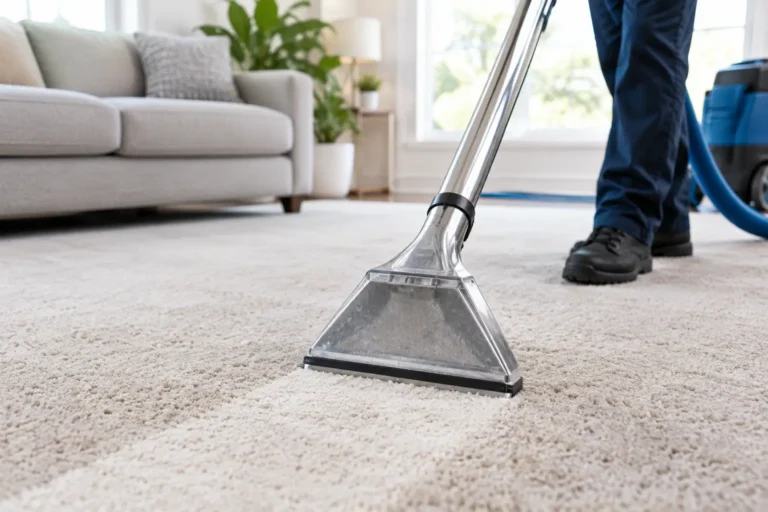
When a rug is suitable for wet cleaning, the wash process should be controlled from start to finish. Cleaning solution is applied based on the rug’s fiber and soil condition, then worked in gently enough to avoid damage while still releasing embedded contamination.
Rinsing matters just as much as washing. If detergent remains in the rug, it can leave the fibers sticky, attract new soil quickly, and create a rough feel underfoot. Thorough rinsing and extraction help remove both the loosened dirt and the cleaning residue.
This is one reason rental carpet machines often disappoint on area rugs. They may add water and detergent, but they do not always remove enough of either. Too much leftover moisture can also affect the backing, padding, and floor underneath.
Drying is where many rug problems begin
A rug is not professionally cleaned until it is professionally dried. Slow drying can lead to mildew odors, browning, dye migration, and warped foundation fibers. That is especially true for thick rugs, natural fibers, and rugs with heavy backing.
Proper drying uses airflow, controlled conditions, and enough extraction to remove moisture quickly and evenly. The rug should be dried flat or in a way that supports its structure. Once dry, the pile can be groomed so the texture looks even and the rug feels soft again.
If a rug still feels damp hours later, that is a warning sign. Even when the surface seems dry, moisture can remain trapped deeper inside.
In-home cleaning vs. off-site rug cleaning
Some area rugs can be cleaned successfully in the home. This usually makes sense for durable synthetic rugs, lightly soiled pieces, or situations where moving the rug is not practical. In-home service is convenient and can be effective when the rug does not require full immersion washing.
But some rugs should be cleaned off-site. Heavily soiled rugs, urine-damaged rugs, delicate natural fiber rugs, and valuable handmade rugs often benefit from a controlled facility process. Off-site cleaning allows for more complete dusting, washing, rinsing, and drying without risking the home flooring underneath.
It depends on the rug and the problem. Convenience matters, but so does using the method that protects the rug long term.
When not to try doing it yourself
If the rug is expensive, handmade, antique, has fringe damage, bleeds color, smells strongly of urine, or has stains that have already been treated several times, DIY cleaning can make the problem worse. The same goes for rugs over hardwood floors where excess moisture could affect both the rug and the floor.
A good rule is simple: if replacement would be costly or frustrating, be careful about experimenting. Professional cleaning is often less expensive than correcting preventable damage.
How often area rugs should be cleaned
Most area rugs benefit from regular vacuuming and periodic professional cleaning. In a typical home, every 12 to 18 months is a reasonable range. Homes with pets, children, allergies, or heavy foot traffic may need more frequent service.
Restaurants, offices, waiting areas, and other commercial settings usually need a tighter schedule because the rug acts as a filter for a much higher volume of soil. Cleaning frequency should match use, not just appearance.
What to expect from a reliable rug cleaning service
If you are hiring a company, look for a process that includes inspection, fiber identification, soil removal, stain treatment, safe cleaning, and proper drying. Clear communication matters too. You should know what method is being used, what results are realistic, and whether any risks exist based on the rug’s condition.
Companies such as DMV Dream Clean build trust by keeping that process straightforward. Customers want clean, healthier spaces, but they also want fast scheduling, clear answers, and confidence that the rug will be treated with care.
A professionally cleaned rug should look brighter, feel fresher, and carry less hidden soil than before. More important, it should still be structurally sound after the job is done.
The best rug cleaning is not the fastest or the cheapest. It is the cleaning that solves the problem without creating a new one, and that is what professional care is supposed to deliver.