A sofa can look clean from across the room while holding months of body oils, pet hair, food residue, dust, and allergens in its fibers. That is why upholstery cleaning choices should be based on more than a visible stain. The right approach protects the fabric, improves the feel and appearance of your furniture, and helps create a cleaner indoor environment for your home or business.
For homeowners, renters, property managers, and business owners in Maryland, Washington DC, and Northern Virginia, the best option depends on the furniture material, the type of soil, how quickly it needs to dry, and whether there are children, pets, customers, or employees using the space every day. A careful cleaning plan delivers better results than treating every couch or chair the same way.
Upholstery Cleaning Choices Start With the Fabric
Before choosing a method, identify the upholstery. Manufacturers often attach a cleaning code tag beneath cushions or on the furniture frame. These codes offer useful direction, but they do not replace a professional inspection.
A code marked W generally permits water-based cleaning. S indicates solvent-based cleaning only, while WS may allow either method. An X code means the fabric should only be vacuumed or professionally evaluated. Using too much water on a fabric that is not designed for it can cause water rings, color bleeding, shrinkage, or damage to the cushion filling.
Fabric construction matters too. Durable synthetic fabrics such as polyester, microfiber, and olefin often respond well to professional hot-water extraction or low-moisture cleaning. Natural materials, including cotton, linen, wool, silk, and viscose, can be more sensitive. Textured fabrics, velvet, and delicate blends need extra care because aggressive brushing or the wrong cleaning solution can change the pile or leave marks.
Leather is a separate category. It should not be treated like fabric upholstery. Proper leather care focuses on gentle cleaning, soil removal from seams, and conditioning as appropriate to help prevent drying and cracking.
Common Upholstery Cleaning Methods
Hot-Water Extraction for Deep Soil Removal
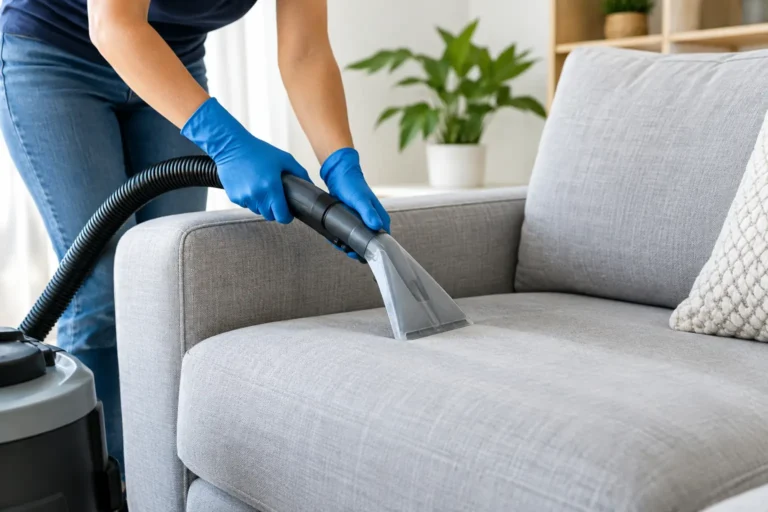
Hot-water extraction, sometimes called steam cleaning, uses heated water and a cleaning solution to loosen embedded soil before the equipment extracts moisture and debris from the fabric. Despite the common name, professional upholstery cleaning is not simply blasting furniture with steam. A trained technician controls moisture, solution strength, agitation, and extraction based on the material.
This option can be a strong choice for durable upholstered sofas, sectionals, dining chairs, and office seating with general buildup, food spills, pet-related soil, or heavy everyday use. It can refresh the fabric and remove soil that ordinary vacuuming cannot reach.
The trade-off is drying time. Well-executed extraction should leave upholstery damp, not soaked, but larger cushions and humid conditions can still require several hours of drying. Good airflow, ceiling fans, and reasonable indoor temperatures help. Furniture that is heavily soiled may also need more than one treatment for the best result.
Low-Moisture Cleaning for Faster Drying
Low-moisture cleaning uses significantly less water than extraction. Depending on the fabric and condition, it may involve specialized encapsulating solutions, controlled agitation, or a low-moisture machine process. As the product dries, it helps capture loosened soil for removal through vacuuming.
This method is especially practical for offices, waiting rooms, rental turnovers, and busy homes where furniture needs to return to use quickly. It can also be a better fit for materials that should not become overly wet.
Low-moisture service is not automatically the answer for every piece. Upholstery with deep odor issues, extensive pet accidents, or substantial embedded soil may need extraction or targeted treatment first. The goal is not to choose the fastest method at all costs. It is to use the safest method that can address the actual problem.
Dry Solvent Cleaning for Sensitive Fabrics
Some upholstery cannot tolerate water-based methods. For those pieces, dry solvent cleaning may be the appropriate option. This approach uses specialized solvent-based products to break down oily soil while minimizing the risk of water damage.
It is often considered for delicate natural fibers, fabrics with an S cleaning code, and materials that are prone to shrinking, browning, or color transfer. Because solvents must be selected and used carefully, this work is best left to experienced technicians who can test the fabric before cleaning the full piece.
Spot Treatment for Specific Stains
A recent coffee spill or ink mark does not always mean the entire sofa requires a full cleaning. Targeted spot treatment can be helpful when the upholstery is otherwise in good condition. Still, stain removal is rarely as simple as applying a store-bought product and rubbing hard.
Different stains require different treatment. Protein-based spots, grease, dyes, tannins, and pet accidents respond differently, and the wrong product can set the stain or damage the color. Rubbing can also spread the spill deeper into the fibers. Blotting promptly with a clean white cloth is usually the safer first move, followed by a professional evaluation for anything persistent.
When Odor, Allergens, or Pets Are Part of the Problem
Visible stains are only one part of upholstery care. Sofas and chairs collect dust, skin flakes, pollen, pet dander, and everyday residue. In households with allergies or pets, routine upholstery cleaning can support a fresher and more comfortable living area.
Odors need a separate assessment. Fragrance products may cover a smell temporarily, but they do not remove the source. Pet urine, smoke exposure, food spills, and mildew concerns may require focused odor treatment along with cleaning. If moisture has reached cushion foam, padding, or the furniture frame, surface cleaning alone may not solve the issue.
For commercial spaces, clean seating affects more than appearance. Restaurant booths, office chairs, lobby furniture, and waiting-room seating are used by many people throughout the day. A professional maintenance schedule helps protect the furniture investment while presenting a cleaner environment to customers and staff.
Why DIY Machines Can Be Risky
Rental machines and consumer upholstery tools can help with light maintenance when used carefully, but they have limits. They may not provide enough extraction to remove all moisture and soil, especially from thick cushions. Overwetting can create lingering odors, encourage mildew growth, or leave behind residue that attracts new dirt faster.
DIY cleaning can also void the benefits of a warranty or worsen a delicate fabric if the wrong solution is used. This does not mean every small spot requires an emergency service call. It does mean that valuable furniture, sensitive materials, recurring odors, and large stained areas deserve a more controlled approach.
What to Expect From Professional Upholstery Cleaning
A reliable service begins with an inspection. The technician should look at the fabric type, construction, condition, visible stains, odor concerns, and cleaning code when available. Testing a small hidden area is a sensible precaution before applying products across the furniture.
The process commonly includes dry soil removal, appropriate pre-treatment, controlled cleaning, extraction or low-moisture soil removal, and grooming or resetting the fabric where needed. Technicians should also explain realistic expectations. Some old stains, sun fading, bleach spots, wear patterns, and damage from previous cleaning attempts cannot be fully reversed, even when the furniture is thoroughly cleaned.
At DMV Dream Clean, the focus is on matching the cleaning process to the piece of furniture rather than applying a one-size-fits-all method. That helps homeowners and businesses make a practical decision based on safety, results, drying needs, and budget.
How Often Should Upholstery Be Cleaned?
Most homes benefit from professional upholstery cleaning every 12 to 24 months. Furniture in active family rooms, homes with pets, rental properties, and commercial settings may need attention more often. Cleanings are also worthwhile before hosting guests, moving in or out, preparing a property for sale, or after an illness, pet accident, or major spill.
Between appointments, vacuum upholstered furniture regularly using a soft brush attachment. Turn and fluff removable cushions when possible, address spills promptly, and keep food and heavily soiled shoes away from light-colored seating. Small habits reduce buildup and make professional cleaning more effective when it is time for a deeper refresh.
The best upholstery cleaning choice is the one that respects your fabric and solves the problem beneath the surface. A quick assessment can prevent costly mistakes, protect the furniture you use every day, and leave your space feeling cleaner, healthier, and ready to enjoy.