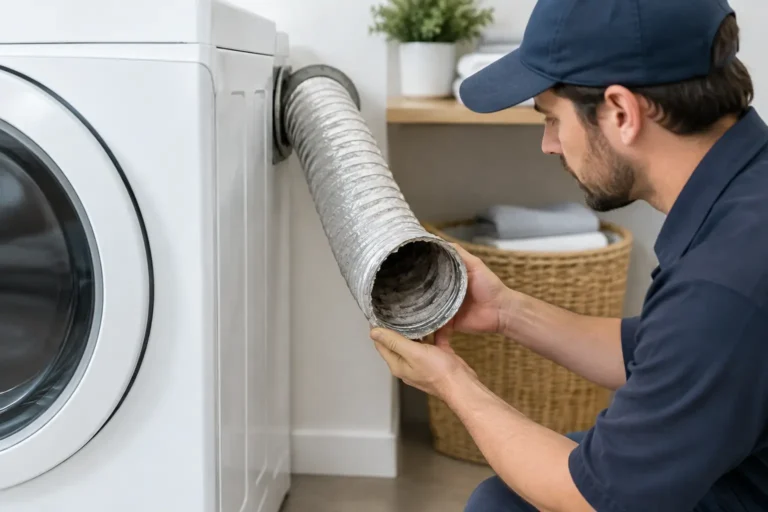
A dryer hose is easy to overlook because it sits behind the appliance. But when it becomes crushed, torn, loose, or filled with lint, it can restrict airflow, raise drying times, and create a fire risk. If you have searched when replace dryer hose, the answer is usually not based on a calendar alone. It depends on the hose material, its condition, how the dryer is performing, and whether the full vent system is clear.
For most homes and businesses, the dryer hose is the short connector that runs from the back of the dryer to the wall vent. It is not the same as the longer vent duct that carries exhaust outside. Both need attention, but the flexible connector is especially vulnerable to damage when a dryer is pushed back, moved for cleaning, or installed in a tight laundry area.
When to Replace a Dryer Hose
Replace a dryer hose when it is damaged, made from unsafe material, difficult to keep properly positioned, or contributing to poor dryer performance. A good hose does not last forever, particularly in busy households, rental properties, laundromats, salons, and other spaces where dryers run frequently.
The most obvious reason for replacement is visible damage. Check the connection behind the dryer and at the wall. If you see tears, holes, loose joints, rust, heavy crushing, or sharp bends, the hose should be replaced. Even a small opening can release moist air and lint into the laundry area instead of sending it outdoors.
A crushed hose also deserves attention. Many dryers are pushed too close to the wall after installation or routine cleaning. The hose gets flattened, airflow slows down, and the dryer has to work harder to remove moisture from clothing. The problem may look minor from the outside, but it can quickly lead to hotter operation and lint buildup.
1. Your Clothes Take More Than One Cycle to Dry
Long drying times are one of the most common signs of restricted airflow. Before assuming the dryer itself has failed, check the lint screen, the hose behind the unit, and the outside vent flap. A hose that is kinked, compressed, or clogged can prevent hot, damp air from leaving the dryer efficiently.
This does not always mean the hose alone needs replacement. Lint can also be packed farther down the vent line, especially in homes with long duct runs or several turns before the exterior exit. If the hose is in good shape but drying is still slow, professional dryer vent cleaning may be the safer next step.
2. The Hose Is Plastic, Vinyl, or White Ribbed Material
Plastic and vinyl dryer hoses should be replaced as soon as practical. These materials can sag, tear, and trap lint in their ridges. They are also more likely to overheat than properly rated metal dryer connectors.
A flexible foil hose is better than plastic, but it is still easily crushed and can collect lint in its folds. For many installations, a metal semi-rigid dryer duct offers a safer, more durable option. The right choice depends on the space behind your dryer, the manufacturer’s requirements, and local building code. A tight laundry closet may require careful measuring and installation rather than forcing a hose to bend sharply.
3. You Smell Burning, Notice Excess Heat, or See Moisture
A hot laundry room, an unusually hot dryer exterior, or a burning smell should never be ignored. Turn off the dryer and avoid running another load until the cause is checked. These warning signs can come from a blocked hose, a clogged vent line, an appliance issue, or lint buildup around the dryer.
Moisture around the dryer or on nearby walls can also point to a disconnected or leaking hose. Dryer exhaust contains warm, humid air. When that air leaks indoors, it can contribute to condensation, musty odors, and potential damage in enclosed laundry spaces.
4. The Hose Comes Loose or Will Not Stay Connected
A dryer hose should fit securely at both ends. If it repeatedly slips off, has been taped in place, or no longer seals properly around the dryer outlet or wall connection, replacement is often the best solution. Tape may seem like a quick fix, but it is not a dependable answer for a loose, damaged, or poorly fitted connector.
The connection should be secured with appropriate clamps, with the hose routed as straight and short as the setup allows. Avoid screws that extend into the duct, since they can catch lint. A properly installed hose should not be under tension, sharply pinched, or crushed against the wall.
5. You Find Lint Behind the Dryer or Around the Connection
Some lint around the lint screen is normal. Lint collecting behind the dryer, at the wall opening, or near the hose joints is different. It can mean that air is escaping through a gap or that the system is backing up because the vent is restricted.
Pulling the dryer out and vacuuming behind it is helpful housekeeping, but it does not remove lint from the hose and the duct run. If lint has built up around the connection, inspect the hose carefully and consider having the full vent system cleaned. Replacing a worn hose without clearing a blocked exterior duct can leave the main problem unresolved.
6. You Recently Moved the Dryer or Completed Renovations
Dryer hoses are often damaged during moves, flooring projects, appliance replacements, and renovations. The connector can be pulled loose, punctured, or bent out of shape without anyone noticing. It is smart to inspect it whenever the dryer has been moved.
New flooring can also change how close the dryer sits to the wall. A hose that fit before may now be compressed. In a rental property, include a dryer hose check between tenants, especially if the laundry appliance has been pulled out for cleaning or maintenance.
7. The Outside Vent Flap Barely Opens
When the dryer is running, the exterior vent flap should open enough to release air. If it barely moves or stays closed, airflow may be restricted by lint, a damaged hose, a blocked duct, or a stuck vent cover. Never assume the issue is only outside. The blockage may be anywhere between the dryer and the exterior termination.
A weak airflow test is a good reason to schedule an inspection, especially if your dryer is taking longer to dry or operating at higher temperatures. Clearing the full pathway protects both the appliance and the property.
How Often Should You Inspect the Dryer Hose?
Check the dryer hose at least once a year, and inspect it more often in high-use homes or commercial settings. Families doing several loads each week, pet owners, property managers, and businesses with frequent laundry needs may benefit from more regular checks.
There is no fixed rule that says every dryer hose must be replaced after a certain number of years. A high-quality metal connector that is correctly installed and undamaged may remain serviceable for years. A thin foil or plastic hose in a cramped space may need replacement much sooner. Condition matters more than age.
At the same time, do not wait for a visible tear if drying performance has changed. Lint and airflow issues often develop gradually. An annual dryer vent cleaning schedule can help keep the system working efficiently, but homes with long vents, frequent loads, or noticeable lint buildup may need service sooner.
Replace the Hose or Clean the Dryer Vent?
Sometimes you need both. Replace the hose when it is unsafe, damaged, disconnected, or crushed. Clean the dryer vent when lint or debris is restricting the air path beyond the hose. If you replace a hose but leave a clogged vent line in place, the dryer can still overheat and take too long to dry.
Professional service is especially useful when the dryer vent travels through walls, ceilings, crawl spaces, or multiple floors. These systems can hide significant lint buildup where a household vacuum cannot reach. DMV Dream Clean helps homeowners, property managers, and businesses address the full dryer vent system, not just the visible connection behind the appliance.
A dryer hose is a small part with a big job. If it looks damaged, feels crushed, or is paired with longer drying times, treat it as a safety issue rather than a minor inconvenience. A prompt inspection can help keep laundry moving, protect your appliance, and give you greater confidence every time you start a load.