That sour smell when you walk into a room usually means the carpet is holding more than dust. If you are wondering how to remove carpet odors without masking them with sprays, the key is to find the source first. Pet accidents, spilled drinks, moisture, smoke, and everyday foot traffic all settle deep into carpet fibers and padding, which is why odors often return after a quick surface clean.
The good news is that many carpet smells can be improved with the right approach. The less good news is that not every odor problem is a simple DIY fix. Some smells stay trapped below the surface, and if moisture is involved, waiting too long can make the issue more expensive and harder to solve.
How to remove carpet odors starts with the source
A carpet does not create odor on its own. It absorbs what lands on it and what settles into it over time. That matters because the best treatment for pet urine is different from what works for mildew, food spills, or smoke residue.
If the smell is strongest in one spot, start there. A localized odor often points to a spill, accident, or hidden moisture issue. If the whole room smells stale, the problem may be broader buildup from traffic, pets, cooking, or poor ventilation. In commercial spaces, odors can also come from repeated use, damp entryways, and cleaning products that leave residue behind.
Before using any deodorizer, take a close look at the carpet and the surrounding area. Check for stains, dampness, discoloration, or signs that the padding underneath may be affected. If the smell gets worse when the room is closed up, humidity may be making trapped odor more noticeable.
Start with dry soil removal
One step gets skipped more than it should: thorough vacuuming. Dirt, hair, dander, and food particles all contribute to odor, especially when they settle deep into the pile. If you apply baking soda or a carpet product before removing that debris, you can end up trapping the problem instead of improving it.
Vacuum slowly and make multiple passes in each direction. Pay extra attention to corners, under furniture edges, and high-traffic lanes. If pets are part of the household, use attachments to remove hair before treating the carpet. This alone may reduce mild stale smells and gives any next step a better chance of working.
Use baking soda the right way for light odors
For general odor absorption, baking soda can help. It works best on mild smells caused by everyday use, not on strong contamination or moisture problems. Sprinkle a light, even layer over the dry carpet and let it sit for several hours. Overnight is often better if the area can stay unused.
After that, vacuum thoroughly. If the odor improves but does not disappear, that tells you the smell may be deeper in the fibers or below them. Baking soda is useful, but it is not a cure for urine in the padding, smoke saturation, or mold-related odors.
One caution matters here. If your carpet is damp, do not add baking soda and leave it sitting in moisture. That can create clumping and make cleanup harder. Dry conditions are best.
Treat spills and pet odors with the right cleaner
Protein-based odors, especially from pets, need more than a scented carpet shampoo. They need a product designed to break down the organic material causing the smell. If urine has soaked through to the pad, even a strong cleaner on the surface may only offer temporary relief.
Blot fresh accidents immediately with clean towels. Press down firmly and avoid scrubbing, which can spread the stain and push it deeper. Then apply an enzyme-based cleaner according to the label instructions and allow enough dwell time. That waiting period is important because the cleaner needs time to work on the odor source.
For older pet spots, results depend on how far the contamination traveled. If the smell returns on humid days or after cleaning, the padding or subfloor may also be affected. That is usually the point where professional carpet cleaning becomes the smarter option.
How to remove carpet odors caused by moisture
A musty carpet smell usually points to moisture. Sometimes that comes from a spill that never fully dried. Other times it comes from high humidity, poor ventilation, a plumbing issue, or past water damage. In these cases, deodorizing alone will not solve the problem because the odor is tied to damp material.
Start by checking whether the carpet feels cool or slightly damp. Look near baseboards, under furniture, and around windows. If you recently cleaned the carpet with too much water, drying may be the only fix needed. Use fans, air conditioning, and a dehumidifier to speed the process.
If the odor stays after the carpet is fully dry, there may be hidden growth in the padding or beneath the carpet. That is not something to ignore. Beyond the smell itself, indoor air quality can be affected, especially for children, older adults, and anyone with allergies or respiratory concerns.
Be careful with store-bought carpet shampoos
Many homeowners rent machines or buy carpet shampoos hoping for a fast reset. Sometimes that helps, especially for general dullness and surface dirt. But there is a trade-off. If too much water is used, or if detergent is not fully extracted, the carpet can end up smelling worse a day or two later.
Residue is another common issue. Soap left behind attracts soil, which means the carpet can get dirty again faster and start holding odors all over again. This is one reason professional hot water extraction often produces better, longer-lasting results than a basic rental machine.
If you do clean the carpet yourself, use less product than you think you need, avoid over-wetting, and make sure the area dries as quickly as possible. Open windows if weather allows, run fans, and keep foot traffic light until the carpet is dry.
When odor means the problem is below the carpet
Some smells are not really in the carpet fibers anymore. They are in the padding, the subfloor, or both. This is common with repeated pet accidents, old spills, water damage, and smoke exposure. It is also common in rental turnovers and commercial properties where several odor sources may overlap.
A few signs point to a deeper issue. The smell returns shortly after cleaning. One section of carpet smells much stronger than the rest. The odor worsens in warm or humid conditions. Or you notice a visible stain that has come back after treatment. In these situations, surface products rarely do enough.
Professional cleaning can help determine whether extraction is enough or whether padding replacement or restoration work is needed. That matters because spending money on repeated DIY products often costs more in the long run when the real problem never left.
Why professional carpet cleaning often works better
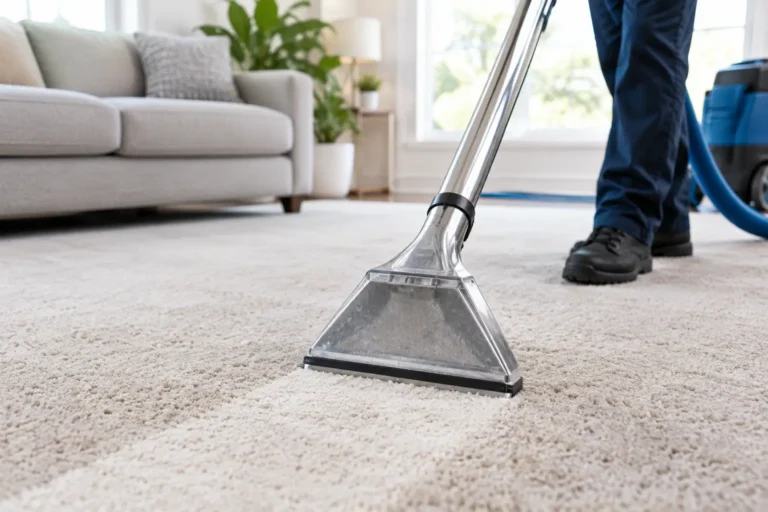
Professional equipment does more than make the carpet look cleaner. It reaches deeper into the pile, removes embedded soil more effectively, and extracts moisture better than most consumer machines. For odor issues, that deeper cleaning can make a major difference.
It also helps to have an experienced technician assess the type of odor before choosing a treatment. Smoke, pet urine, mildew, food spills, and general traffic buildup do not respond the same way. A professional can spot when a carpet just needs a deep clean and when there may be a larger moisture or restoration concern behind the smell.
For homes and businesses that need a dependable local team, DMV Dream Clean handles carpet cleaning with the kind of practical focus customers want: fast scheduling, clear communication, and results you can see and smell.
Simple habits that help keep odors from coming back
Once the carpet smells fresh again, a few habits make a real difference. Vacuuming regularly helps keep odor-causing debris from settling in. Addressing spills right away prevents them from soaking into the backing. Keeping indoor humidity under control reduces musty smells, especially in basements or lower levels.
If you have pets, routine cleaning matters even more. The goal is not just to react when something smells bad, but to prevent buildup before it settles deep into the carpet. In offices and commercial spaces, scheduled carpet cleaning can also support a cleaner appearance and a better experience for staff, tenants, and customers.
There is no single answer to how to remove carpet odors because the right fix depends on what caused the smell and how deep it goes. Mild odors may respond well to vacuuming, baking soda, and targeted spot treatment. Strong, recurring, or musty odors usually need a deeper solution. If the smell keeps coming back, that is your sign to stop covering it up and start treating the real problem.