That smoky, dirty smell after a fireplace issue, candle accident, kitchen flare-up, or puff back from a heating system does not usually leave on its own. If you are searching for how to remove soot smell, the first thing to know is simple: the odor stays because tiny soot particles and oily residue have settled into surfaces, fabrics, and the air itself.
That is why opening a window for a few hours rarely solves the problem. The smell can cling to drywall, ceilings, upholstery, carpets, rugs, and HVAC components. If the source is small, you may be able to handle it with careful cleaning. If the soot spread through multiple rooms or entered your vents, a deeper professional approach is often the safer and faster fix.
Why soot smell is so hard to remove
Soot is not like ordinary dust. It is fine, dark residue made up of carbon and other byproducts from incomplete combustion. Depending on the source, it may also contain oily compounds that stick stubbornly to surfaces. That is what makes the smell linger long after the visible mess seems under control.
In homes and businesses, soot odor often follows fireplace backdrafts, furnace puff backs, candle smoke, cooking fires, electrical issues, or chimney problems. Even a small incident can leave a strong smell because the particles are so light and easy to spread. Walking through the area, turning on fans, or vacuuming the wrong way can push soot deeper into materials.
Start with safety before you clean
Before you focus on odor, make sure the source of the smoke or soot is no longer active. If the issue came from a furnace, chimney, fireplace, dryer vent, or electrical malfunction, that system should be inspected before normal use resumes. Cleaning the smell without fixing the cause can lead to the same problem again.
It also helps to wear gloves and a quality mask while cleaning. Soot particles can irritate the eyes and lungs, especially for children, older adults, and anyone with asthma or allergies. If the affected area is large or the air still feels heavy, it is best not to stay in the space longer than necessary.
How to remove soot smell step by step
The most effective way to remove the odor is to treat the problem in layers. Air, surfaces, soft materials, and hidden systems all matter.
Ventilate the area carefully
Fresh air helps, but it should not be your only strategy. Open windows if weather allows, and use fans to push indoor air out rather than stir soot around the room. If you have a central HVAC system that may have pulled in smoke, avoid running it until you know the filter and ductwork are clean enough not to recirculate odor.
Dry clean soot before using liquids
This part matters more than many people realize. Wet wiping loose soot too early can smear it and drive residue further into paint, fabric, or porous materials. Start by using a specialized soot sponge or dry cleaning sponge on walls, ceilings, and hard surfaces. Work gently and in straight passes.
For floors or non-delicate surfaces, a HEPA vacuum can help collect loose particles. A standard vacuum is a risk because it may blow the smallest particles back into the room. If you do not have a HEPA unit, it may be smarter to wait rather than make the spread worse.
Wash hard surfaces with the right cleaner
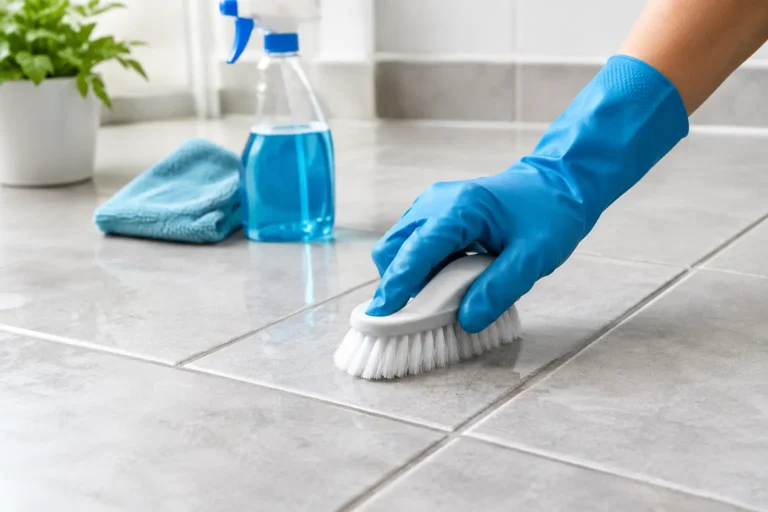
Once the loose soot is removed, wash durable surfaces with a degreasing cleaner or mild detergent solution. Soot from candles, fireplaces, or furnace incidents often leaves behind oily residue that plain water will not fully cut through. Wipe small sections at a time, and change cloths often so you are not just moving the residue around.
Walls, trim, doors, and cabinets may need more than one pass. If the smell remains after cleaning, the surface may still hold residue, or the odor may be trapped inside porous materials nearby.
Clean fabrics and soft materials
This is where soot smell often hangs on the longest. Curtains, upholstered furniture, rugs, carpets, bedding, and clothing can all absorb smoke and soot odor quickly. Wash what can be laundered according to care instructions, ideally with an extra rinse. In some cases, one wash is not enough.
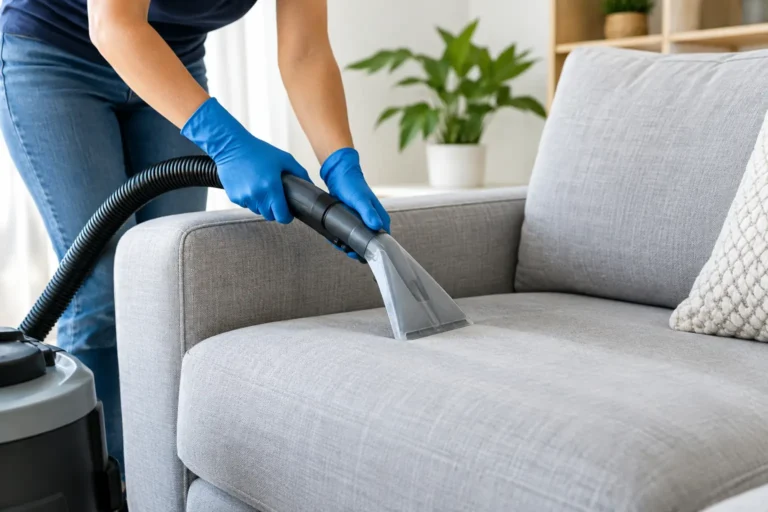
For larger textiles and furnishings, professional cleaning is often the better choice. Upholstery and rug fibers can trap oily particles deep below the surface. Home spot cleaning may improve the smell without fully removing it, which means the odor can return when humidity rises or the room warms up.
Replace HVAC filters and check the air system
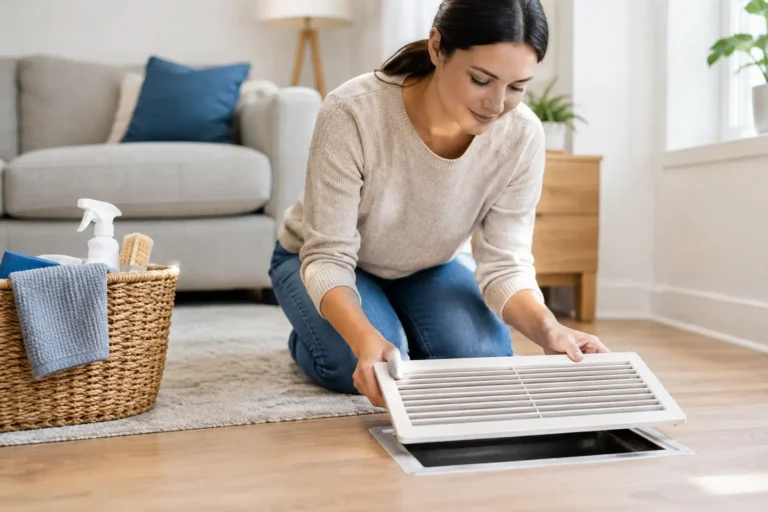
If smoke or soot was pulled into your return vents, the smell can circulate long after the visible cleanup is finished. Replace the HVAC filter right away. If the odor started after a chimney issue, furnace malfunction, or indoor smoke event that spread beyond one room, air duct cleaning may be worth considering.
This is especially true if the smell gets stronger every time the heat or AC turns on. In that case, the system may be carrying particles through the property. A surface cleaning alone will not solve that.
Use odor control, not just fragrance
Air fresheners can cover soot smell temporarily, but they do not remove the source. What works better is odor absorption and air treatment after cleaning is complete. Baking soda, activated charcoal, and air scrubbers with proper filtration can help reduce lingering odor in smaller cases.
But there is a limit. If soot has settled into drywall, insulation, carpeting, or ductwork, odor absorbers will only do so much. Persistent smell usually means there is still contamination in the space.
Common mistakes that make soot odor worse
A lot of property owners lose time here. The biggest mistake is scrubbing soot immediately with water or spray cleaner. That often smears the residue into a larger stain and makes removal harder.
Another common issue is focusing only on what you can see. The smell may be coming from soft furniture, ventilation systems, or upper wall and ceiling areas that were missed during initial cleanup. It is also easy to underestimate how far soot traveled. A small puff back in one room can affect adjoining spaces more than expected.
And while DIY deodorizing sprays are popular, they can create a mixed odor problem instead of solving the original one. If the room smells like smoke and perfume at the same time, the soot is still there.
When DIY works and when it probably will not
If the soot is limited to a very small area, the source has been fixed, and the odor has not spread into carpets, upholstery, or vents, a careful do-it-yourself cleanup may be enough. That is usually the best-case scenario.
If you are dealing with heavy residue, blackened walls or ceilings, repeated odor from the HVAC system, or smoke smell that remains after cleaning, it is time to bring in professional help. The same goes for commercial spaces, multi-unit properties, and homes with children, pets, or anyone sensitive to poor air quality. In those situations, speed and thoroughness matter.
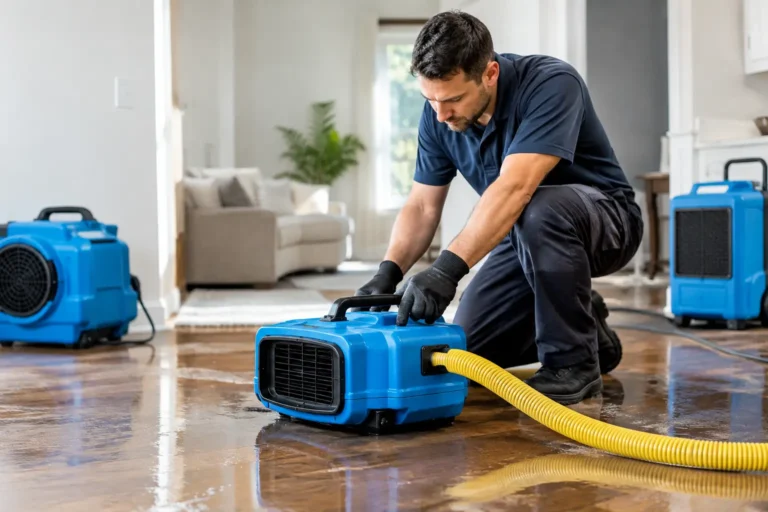
Professional cleaning and restoration teams can identify where the odor is hiding, use the right filtration and cleaning methods, and help prevent the smell from settling in long term. In some cases, that may include carpet cleaning, upholstery cleaning, air duct cleaning, or targeted restoration work depending on the source.
How to remove soot smell for good
If you want lasting results, think beyond the smell itself. Remove the loose soot, clean the residue, treat the soft surfaces, and address the air system if needed. That full approach is what makes the difference between a room that smells better for a day and a property that actually feels clean again.
For homeowners, renters, property managers, and business owners, the real goal is not just better scent. It is safer air, cleaner surfaces, and confidence that the issue is truly handled. That is the standard DMV Dream Clean believes in, especially when smoke and soot have affected the comfort of your home or workplace.
If the odor still lingers after your first round of cleaning, do not assume you have to live with it. Soot smell is stubborn, but when the source is handled correctly, clean air and a fresher space are absolutely possible.