A mattress can look clean while holding sweat, skin cells, dust, allergens, and odors deep below the sheets. Learning how to sanitize mattresses helps protect the place where your family spends hours every night, but the method matters. Too much moisture, harsh chemicals, or aggressive scrubbing can leave behind stains, damage foam, and create the conditions for mold.
For most homes, mattress sanitizing is a practical routine of removing surface debris, treating stains correctly, controlling odor, and allowing the mattress to dry completely. It is not the same as soaking a mattress or trying to disinfect every inch with strong chemicals. The goal is a fresher, cleaner sleep surface without causing a bigger problem underneath.
When Does a Mattress Need Sanitizing?
A regular mattress refresh is useful every three to six months, especially in homes with pets, children, allergy concerns, or heavy seasonal pollen. You may need more immediate attention after an illness, an accident, a spill, prolonged sweating, pet contamination, or water exposure.
Common signs include a lingering odor, visible stains, increased allergy symptoms in the bedroom, or a mattress that has not been cleaned since it was purchased. Dust mites are too small to see, but the allergens associated with them can build up in bedding and mattresses over time.
If the mattress has been exposed to sewage, floodwater, widespread mold, or a large amount of bodily fluid, home cleaning may not be enough. Those situations require a careful professional assessment because contamination can reach deep into the mattress materials.
How to Sanitize Mattresses Safely at Home
Start by checking the mattress care tag. Memory foam, latex, pillow-top, and hybrid mattresses can react differently to moisture and cleaning products. In general, use as little liquid as possible and never saturate the mattress.
Strip the Bed and Wash Everything Around It
Remove sheets, pillowcases, blankets, comforters, and mattress protectors. Wash washable bedding according to the care label using the warmest water the fabric allows, then dry it fully. This step matters because putting unwashed bedding back on a cleaned mattress quickly reintroduces oils, allergens, and odors.
A zippered mattress encasement is also worth considering after cleaning. It creates a protective barrier against dust, allergens, and future accidents while making routine care easier.
Vacuum the Entire Mattress Slowly
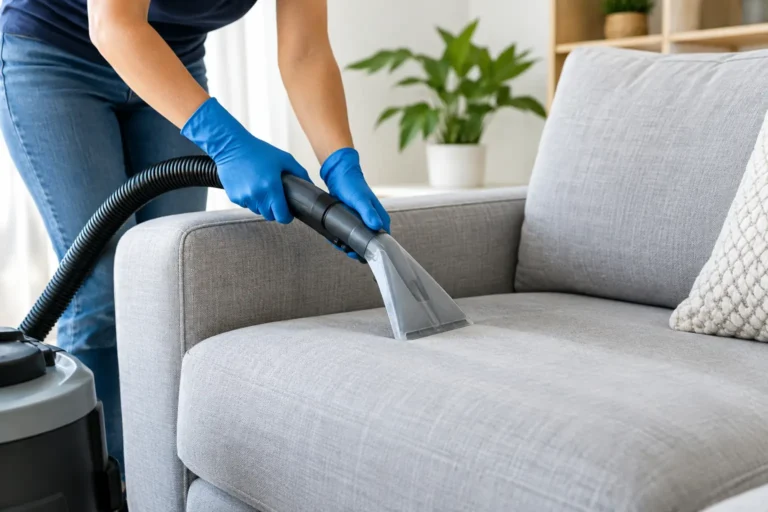
Use a vacuum with a clean upholstery attachment. Work across the top, sides, seams, piping, and creases with slow overlapping passes. These areas collect dust, hair, crumbs, skin flakes, and pet dander that a quick once-over can miss.
Vacuuming does not disinfect a mattress, but it removes dry debris before you apply any treatment. That makes the rest of the cleaning process more effective and helps prevent dirt from being rubbed deeper into the fabric.
Treat Stains With a Light Touch
For most fresh stains, blot first with a clean white cloth. Do not rub, since rubbing can spread the stain and push it further into the mattress. Apply a small amount of an upholstery-safe cleaner or a mild solution of dish soap and water to the cloth, not directly to the mattress.
Blot the area gently, then use a second slightly damp cloth to remove residue. Finish by pressing a dry towel over the spot to pull out as much moisture as possible. For protein-based stains such as sweat, urine, or vomit, an enzyme-based upholstery cleaner may work better than standard soap. Always test a hidden area first and follow the product directions.
Avoid chlorine bleach. It can discolor fabric, weaken fibers, leave a strong odor, and may not be appropriate for the mattress materials beneath the cover.
Deodorize With Baking Soda
Once the mattress is dry from any spot treatment, sprinkle a light, even layer of baking soda across the surface. Let it sit for several hours, or longer if the mattress has a noticeable odor. Baking soda can help absorb odors and surface oils without adding moisture.
Vacuum it thoroughly afterward. Take your time, particularly along seams and quilted areas, so powder does not remain trapped in the mattress cover.
Use Steam Carefully, If the Mattress Allows It
Steam can be helpful for some mattress surfaces because heat supports surface-level sanitizing without relying on heavy chemicals. However, steam also introduces moisture. That is the trade-off.
If your manufacturer permits it, use a steamer sparingly and keep it moving. Do not hold steam in one place or soak the fabric. A mattress must be allowed to dry completely before it is covered or used again. Open windows, run fans, and allow plenty of air circulation. If the room is humid or the mattress feels damp below the surface, skip steam cleaning and choose a low-moisture professional service instead.
Let the Mattress Dry All the Way
Drying is one of the most overlooked parts of mattress cleaning. Even a clean-looking mattress can develop musty odors or mold concerns if moisture remains inside the padding.
Leave the bed uncovered until the surface is fully dry to the touch. Position fans to move air across the mattress, use air conditioning or a dehumidifier if needed, and avoid making the bed too soon. Depending on the cleaning method and indoor humidity, complete drying may take several hours.
What Not to Use on a Mattress
Strong disinfectant sprays may sound like the fastest solution, but many are not designed for porous upholstered materials. They can leave residue where you sleep, create harsh fumes, or add enough liquid to cause damage. Fragranced sprays often mask odor rather than remove its source.
It is also best to avoid pouring vinegar, hydrogen peroxide, or rubbing alcohol directly onto the mattress. These products can discolor fabric, affect foam, or leave moisture behind. Natural does not always mean mattress-safe, and more product does not mean a cleaner result.
If you want to use a sanitizer marketed for soft surfaces, read the label closely. Confirm it is safe for upholstery, follow the required contact time, and use it only as directed. Never mix cleaning products.
When Professional Mattress Cleaning Is the Better Choice
Home care works well for routine maintenance and minor spills. Professional cleaning is a better option when odors return, stains are old, allergens are a persistent concern, or the mattress has been exposed to significant moisture. It can also be the right call for rental turnovers, guest rooms, furnished properties, and commercial spaces where cleanliness affects guests, tenants, or customers.
A trained technician can evaluate the mattress fabric and filling, select an appropriate cleaning method, and use controlled moisture extraction rather than over-wetting the material. This is especially useful for thick pillow-top mattresses and foam beds that are difficult to dry at home.
DMV Dream Clean provides specialized mattress cleaning for homeowners, renters, and property managers who want a cleaner sleep surface without the guesswork. Professional service can help address deep-set soil, odors, and stains while protecting the materials that make your mattress comfortable.
Keep a Clean Mattress Cleaner for Longer
Sanitizing works best when it is paired with a few simple habits. Wash sheets weekly or every other week, vacuum the mattress during seasonal deep cleaning, and use a washable protector that fully covers the mattress. Letting the mattress air out briefly when changing sheets can also help reduce trapped moisture.
Try to address spills right away. The longer liquid sits, the more likely it is to travel into padding and create an odor that is harder to remove. For homes with allergies, keeping bedroom floors, rugs, upholstery, and air vents clean can make a noticeable difference because allergens do not stay in one place.
A clean mattress should feel like part of a clean room, not a hidden source of odor or irritation. Use gentle methods, keep moisture under control, and bring in experienced help when the problem is deeper than a surface refresh.