A basement flood can turn from a puddle into damaged flooring, soaked drywall, and a mold concern faster than most property owners expect. Flooded basement cleanup should begin with safety and moisture control, not with moving boxes or turning on a fan. The right first steps can protect your health, limit damage, and give your home a better chance of drying properly.
Start Flooded Basement Cleanup Safely
Do not walk into standing water if the power may still be on. If water has reached outlets, appliances, electrical panels, or extension cords, stay out of the area and contact a qualified electrician or restoration professional. Turn off electricity at the main breaker only if you can safely reach it without entering water.
Next, consider where the water came from. A broken supply line or heavy rainwater may be manageable with the right cleanup plan. Water from a sewage backup, overflowing toilet, or contaminated drain is a different situation. It can contain bacteria and other hazards that require protective equipment, disinfection, and often professional removal of affected materials.
If you smell gas, notice a damaged furnace or water heater, or see water near electrical equipment, leave the area and get help. No stored belongings are worth taking a risk with electrical shock, gas exposure, or contaminated water.
Once the space is safe to enter, take photos and short videos before moving items. Document water lines on walls, damaged furniture, flooring, appliances, and personal belongings. Clear documentation can make insurance conversations easier and helps restoration teams understand how far the water traveled.
Stop the Water Source Before You Clean
Cleanup will not hold if water is still entering the basement. For a plumbing leak, shut off the home’s main water valve or the valve serving the affected fixture. For rainwater, look for the immediate entry point, such as a failed sump pump, window well, foundation crack, clogged drain, or overflowing gutter system.
A sewer backup should be treated as an urgent sanitation issue. Avoid using toilets, showers, washing machines, or sinks until a plumber identifies the cause. Using water elsewhere in the building can add to the backup and spread contamination into more areas.
It is also wise to notify your insurer early, especially when water has affected finished rooms, flooring, walls, or major equipment. Ask what documentation they need and whether they have requirements before repairs begin. You should still take reasonable steps to prevent further damage, including removing standing water and starting the drying process.
Remove Water and Wet Belongings Quickly
Time matters after a flood. Porous materials begin holding moisture immediately, and mold can begin growing within 24 to 48 hours under the right conditions. The goal is not simply to make the basement look dry. It is to remove water from materials and reduce humidity throughout the space.
For a small amount of clean water, a wet/dry vacuum, mop, and towels may be enough to begin. Do not use a regular household vacuum on water. For several inches of water, a large finished basement, or water that has reached carpet and drywall, professional extraction equipment is usually the safer and more effective choice.
Move dry items out first, including documents, electronics, furniture, and boxes stored on the floor. Place belongings in a dry, well-ventilated area and separate wet items from dry ones. Cardboard, books, upholstered furniture, mattresses, and area rugs can absorb a great deal of water. Some items can be cleaned and dried, while others may need to be discarded depending on the water source and how long they remained wet.
Hard surfaces such as metal shelving, plastic storage bins, glass, and sealed furniture are often easier to clean and disinfect. Unfinished wood, laminate, and particleboard furniture are less predictable. They can swell, warp, or hold moisture below the surface even when they appear dry.
Dry the Structure, Not Just the Floor
After standing water is removed, the drying phase begins. Open basement doors and windows only when outdoor air is drier than indoor air. During humid weather, open windows can bring more moisture inside and slow the process.
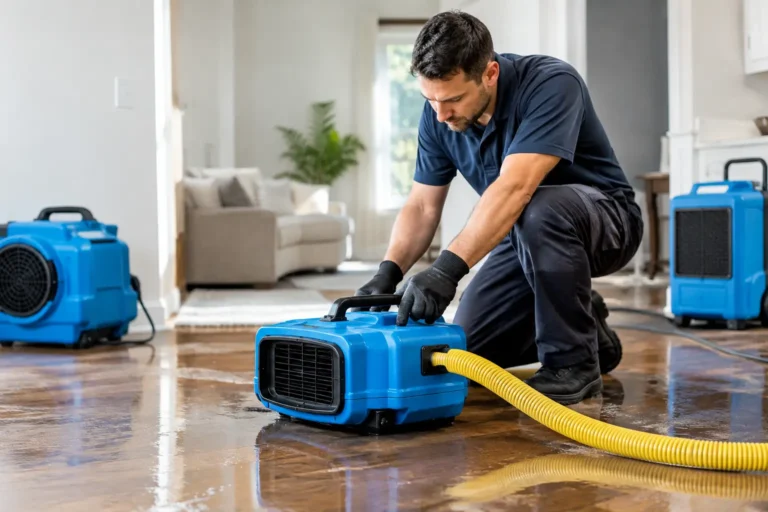
Professional-grade air movers and dehumidifiers work together to pull moisture from carpet, padding, walls, framing, and concrete. Fans alone can help circulate air, but they do not remove moisture from the air. Without dehumidification, damp conditions can remain behind walls, beneath flooring, and inside insulation.
Carpet creates an important decision point. If clean water was removed quickly and the carpet was not heavily saturated, it may be possible to clean and dry it. Carpet padding, however, often needs to be removed because it holds water against the subfloor and is difficult to dry completely. If the water was contaminated or the carpet remained wet for more than a day or two, removal is usually the safer choice.
Drywall may also need attention. If water wicked up from the floor, the bottom section can stay damp even after the room looks normal. Wet insulation behind drywall can trap moisture and create conditions for mold. A restoration team can use moisture readings to determine whether targeted removal is needed rather than tearing out more material than necessary.
Clean and Disinfect Based on the Water Type
Not all floodwater should be handled the same way. Clean water from a broken pipe is generally lower risk at the start, although it becomes less sanitary the longer it sits. Rainwater that enters through the foundation can carry soil and outdoor contaminants. Sewage and toilet backups are considered highly contaminated and require much more careful cleanup.
For affected nonporous surfaces, remove visible soil first and then use an appropriate disinfectant according to its label instructions. Disinfectants need enough contact time to work, so spraying and immediately wiping may not be effective. Never mix cleaning products, especially bleach with ammonia or acids, because dangerous fumes can result.
Avoid relying on strong fragrance to judge whether a basement is clean. A deodorizer may cover an odor without addressing damp drywall, contaminated carpet padding, or moisture under flooring. The basement should be dry, clean, and free of hidden moisture, not simply fresh-smelling.
Know When Professional Restoration Is the Right Call
A small, clean-water leak caught quickly may be manageable for a prepared homeowner. Larger losses require more than basic cleaning tools. Professional water damage restoration is especially helpful when water has spread beyond one room, reached finished walls or flooring, involved sewage, or been present for more than 24 hours.
Call for professional help when you notice any of these conditions:
- Standing water near electrical equipment, appliances, or a furnace
- Sewage, toilet overflow, or water with a strong unpleasant odor
- Soaked carpet, drywall, insulation, cabinets, or wood flooring
- Visible mold, peeling paint, warped materials, or persistent dampness
- A basement that still smells musty after initial cleanup and drying
Experienced technicians use extraction equipment, controlled drying, moisture monitoring, and targeted cleaning to address the full scope of the problem. That approach can reduce unnecessary demolition while helping prevent the costly cycle of lingering moisture and repeat mold concerns.
For homeowners, renters, property managers, and businesses in Maryland, Washington, DC, and Northern Virginia, DMV Dream Clean provides professional water damage restoration with clear communication and practical next steps. The focus is on helping you protect the property, restore affected areas, and move forward with confidence.
Prevent the Next Basement Flood
Once the basement is dry, take a close look at why water got in. Test your sump pump regularly, keep gutters and downspouts clear, and direct runoff away from the foundation. Store boxes and valuables on shelving rather than directly on the floor, especially in older homes or basements with a history of moisture.
A water alarm near the sump pump, water heater, laundry area, or utility sink can provide an early warning before a small leak becomes a major cleanup. If your basement has recurring dampness, do not wait for the next storm to investigate. Addressing drainage, plumbing, and humidity concerns early is one of the simplest ways to protect the space you depend on.