A duct cleaning appointment should not turn into a day of moving furniture, searching for vent covers, or trying to keep pets out of work areas at the last minute. Knowing how to prepare for duct cleaning helps the service move faster, gives technicians proper access, and helps protect your home while the HVAC system is being cleaned.
Most preparation is simple. You do not need to take apart ductwork or clean inside vents yourself. The goal is to make the supply and return vents, furnace or air handler, and main access paths easy and safe to reach.
Why Preparation Makes a Difference
Professional duct cleaning involves more than vacuuming visible vent openings. Technicians may need access to return vents, supply registers, the furnace or air handler, and the areas around the equipment. They may use hoses, vacuum equipment, brushes, and containment tools to remove dust and debris from the system.
When these areas are clear, the crew can spend more of the appointment cleaning rather than rearranging the room. It also reduces the chance of accidental damage to furniture, fragile belongings, or flooring. For households with children, pets, allergies, or busy schedules, a little preparation makes the entire process much easier.
1. Clear Access to Every Vent and Return
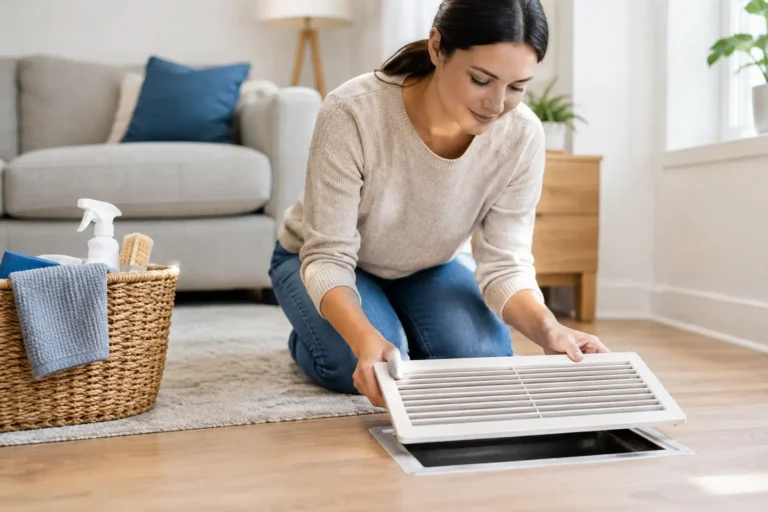
Walk through the property and locate the vents you know are part of your heating and cooling system. Supply vents are often located along floors, walls, or ceilings. Return vents are usually larger and may be found in hallways, living rooms, or near the central HVAC equipment.
Move lightweight furniture, baskets, toys, laundry, and decorative items away from vent openings. Aim for about three to five feet of open space where possible. Technicians need room to remove grilles and position cleaning equipment without leaning over a sofa, bed, desk, or shelving unit.
Some vents will be harder to access than others, especially in furnished bedrooms or commercial offices. That is normal. Focus on the vents you can reasonably clear, and point out any difficult areas when the technicians arrive. Never force heavy furniture to move if doing so could cause injury or damage. A professional crew can discuss the safest option for those areas.
2. Make a Clear Path to the HVAC Unit
The furnace, air handler, or indoor HVAC unit is a key part of the service. It may be in a basement, utility closet, attic, garage, mechanical room, or crawlspace. Make sure the path to that equipment is open and free of trip hazards.
Remove stored boxes, cleaning supplies, seasonal decorations, shoes, and other items from the immediate work area. If the unit is in a closet, take out anything blocking the door or making it difficult to stand near the system. In a commercial space, let staff know that the mechanical room will need temporary access.
Attic and crawlspace access requires extra consideration. If there is a fragile ladder, poor lighting, loose flooring, or a tight access point, mention it when scheduling. The right preparation depends on the property, and advance notice helps the crew arrive ready for the conditions.
3. Protect Fragile Items and Sensitive Surfaces
Duct cleaning is a controlled service, but equipment and hoses need to move through parts of the home or business. Put away fragile décor, low-standing lamps, glass items, and valuables near the planned work paths. If a piece cannot be moved, identify it for the technicians before work begins.
You may also want to roll up small rugs near frequently used walkways or secure them with non-slip backing. This is especially helpful in narrow halls, entryways, and areas around basement stairs. Technicians commonly use protective measures, but clear pathways offer the best protection for both your belongings and the crew.
If you have recently painted walls, refinished floors, or installed new flooring, mention that as well. The crew can take appropriate care around newly completed work.
4. Plan for Pets, Children, and the Workday
The sounds of vacuum equipment and tools can make pets anxious. Before the appointment, place dogs, cats, and other pets in a quiet room away from the work area, or arrange for them to be elsewhere during service. This keeps pets comfortable and prevents them from slipping outside when doors are opened for equipment.
For homes with young children, keep toys off floors near vents and explain that the work areas are off-limits until the service is complete. In offices, retail locations, and rental properties, notify occupants in advance so they know where technicians will be working.
If someone needs to work from home, consider the likely noise level. Duct cleaning equipment can be loud enough to interrupt calls or meetings. Scheduling around important appointments can make the day less stressful.
5. Replace or Have a New HVAC Filter Ready
A clean HVAC filter supports better system performance after duct cleaning. In many homes, it makes sense to replace the filter once the service is finished, especially if the existing filter is visibly dirty or close to its replacement date.
Check the filter size before the appointment and keep a replacement available if you have one. If you are unsure which filter your system uses, do not guess. Take a photo of the existing filter label or ask the technician for guidance. Using the wrong size can allow air to bypass the filter or restrict airflow.
The best filter choice depends on the system, household needs, and manufacturer recommendations. A very high-rated filter may capture smaller particles, but it can also reduce airflow in systems not designed for it. For allergy concerns, ask for practical recommendations rather than choosing based on marketing claims alone.
6. Write Down Any Concerns Before the Crew Arrives
Duct cleaning is a good time to mention issues you have noticed with your indoor air or HVAC operation. You may have certain rooms that get dusty quickly, musty odors when the system starts, weak airflow from one vent, or visible debris around registers.
Make a short note of these concerns, along with any recent renovations, water leaks, pest activity, or construction dust. These details do not always mean there is a duct problem, but they give the technicians useful context. For example, dust after remodeling may call for different attention than a recurring odor near a return vent.
Be clear about what you want addressed, but keep expectations realistic. Duct cleaning can remove accumulated dust and debris from accessible parts of the system. It does not repair damaged ductwork, solve every HVAC performance issue, or replace needed maintenance by a licensed HVAC contractor. A trustworthy provider will explain what the service can do and flag concerns that may need a separate repair.
7. Confirm Parking, Entry, and Building Access
Before your appointment, confirm where the crew can park and how they should enter the property. This matters in DC, Maryland, and Northern Virginia neighborhoods with limited street parking, gated communities, apartment buildings, or office complexes.
For apartments and commercial properties, reserve elevator access if needed and notify the front desk, property manager, or security team. Make sure someone with authority to grant entry will be available. Delays at the door can shorten the useful service window and create avoidable scheduling issues.
If there are special instructions, such as a loading dock entrance, visitor parking rules, a gate code, or stairs that lead to the mechanical room, share them before the crew is on site.
8. Do a Final Walk-Through With the Technicians
When the technicians arrive, take a few minutes to walk them through the property. Show them the HVAC unit, point out all known vents and returns, and identify rooms with difficult access or sensitive belongings. This is also the time to confirm the scope of work and ask how long the appointment is expected to take.
Ask whether you need to turn off the thermostat, move anything else, or stay available during the cleaning. In many cases, you can remain at the property and continue with your day, but the crew may need access to certain rooms at different times.
After the work is complete, review what was cleaned and ask whether there were signs of excess buildup, damaged components, or areas that need follow-up. A reliable service provider should leave you with a clear understanding of the work performed, not unanswered questions.
A Cleaner Start for Your HVAC System
Preparing for duct cleaning does not have to be complicated. Clear the vents, open a path to the HVAC equipment, protect your belongings, and share any concerns you have noticed. Those few steps help technicians work efficiently and help you get the most value from the appointment.
If you want straightforward guidance before scheduling, DMV Dream Clean can help you understand what to expect and prepare your home or business for a cleaner, safer indoor environment.