A wet carpet is easy to see. What you cannot always see after a leak, overflow, or basement flood is the moisture-related debris moving through the air. This air scrubber review for water damage explains where these machines help, where they fall short, and why proper drying and cleaning still matter just as much as filtration.
For homeowners, renters, and property managers, the right response is not simply to place a machine in the room and wait. Water damage restoration works best when the source is stopped, standing water is removed, affected materials are dried, and indoor air is managed while the work is underway.
What an Air Scrubber Does After Water Damage
An air scrubber is a portable filtration unit designed to pull contaminated air through one or more filters and return cleaner air to the space. During water damage cleanup, it can reduce airborne dust, mold spores, fibers, odors, and particles stirred up by wet-material removal.
Most professional-grade units use a pre-filter to capture larger debris and a HEPA filter to capture very small particles. Some setups also include activated carbon, which can help with certain odors and volatile compounds. The machine is useful during demolition, carpet removal, drywall removal, and detailed cleaning because those activities can send settled particles into the air.
That said, an air scrubber does not dry a flooded room. It does not extract water from carpet padding, remove moisture from framing, or repair the pipe or roof that caused the damage. It supports a complete restoration plan rather than replacing one.
Air Scrubber Review for Water Damage: When It Is Worth It
An air scrubber is most valuable when water damage has created a legitimate indoor air quality concern. That can include a long-standing leak behind a wall, visible mold-like growth, a musty odor after saturation, or cleanup work that requires removing wet building materials.
It is also a smart precaution in occupied homes and businesses. Families, tenants, employees, customers, and people with allergies may be more sensitive to dust and odors during restoration. Filtration helps keep the work area more controlled, particularly when paired with containment barriers and careful cleaning.
For a small, clean-water spill that is discovered immediately, an air scrubber may not be necessary. If a supply line dripped onto a limited section of tile and the area is dried quickly, water extraction and dehumidification may be the priority. The need changes when moisture reaches carpet, drywall, insulation, wood flooring, or hidden cavities.
The biggest factor is time. Water that remains in materials for days creates a much different restoration situation than water removed within hours. The longer materials stay wet, the more important moisture assessment, controlled drying, and air management become.
What to Look for in an Air Scrubber
Not every portable air cleaner is suited for restoration work. A small household purifier can improve general air quality, but it may not have the airflow, filtration capacity, or durability needed for an active water damage job.
When evaluating an air scrubber, focus on these practical features:
- True HEPA filtration: A true HEPA filter is designed to capture fine particles that basic filters may miss. This is especially relevant when wet materials are being removed or suspected microbial growth is present.
- Appropriate airflow: Airflow is measured in cubic feet per minute, or CFM. A larger affected area generally needs higher airflow, but room layout, ceiling height, containment, and the condition of the space also affect sizing.
- Filter condition indicators: A clogged filter reduces performance. Units that make filter changes easy and clearly show when service is needed help maintain consistent airflow.
- Ducting and negative-air capability: Some professional machines can be ducted to exhaust filtered air outside or create negative pressure inside a contained work area. This helps limit the movement of particles into clean areas of the property.
Noise is another real consideration. Air scrubbers can be loud, especially at higher settings. In a vacant basement, that may be a minor inconvenience. In an occupied office, bedroom, daycare, or retail space, a restoration team may need to plan machine placement and work hours carefully.
Why Filtration Alone Will Not Solve the Problem
A common mistake after water damage is treating the odor rather than the moisture. If a room smells musty, an air scrubber may make the air feel fresher while it runs, but the odor can return if wet carpet backing, drywall, insulation, or subflooring remains damp.
Effective restoration starts with finding and stopping the water source. Next comes extraction, removal of unsalvageable materials when needed, structural drying with air movers and dehumidifiers, and moisture monitoring. Air scrubbing is added when conditions call for better particle control and cleaner air during the process.
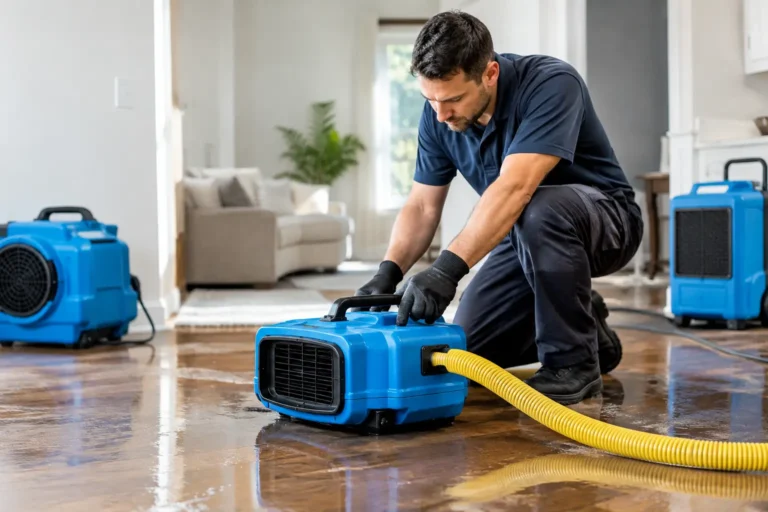
Dehumidifiers deserve special attention because they remove moisture from the air. Air movers speed evaporation from wet surfaces. Together, they help dry materials. An air scrubber filters particles from the air, which is a different job entirely. A reliable restoration plan often uses all three types of equipment, each for its proper purpose.
Placement Makes a Difference
Putting an air scrubber in the hallway outside the affected room may help somewhat, but it is usually more effective to place it near the source of airborne particles or within the contained work area. The intake should not be blocked by furniture, boxes, or plastic sheeting, and doors and openings should be considered when controlling airflow.
If the damaged room connects to bedrooms, a kitchen, or a customer-facing business area, containment may be necessary before demolition begins. This can include plastic barriers, sealed openings, and negative pressure to keep air moving into the work zone rather than out into unaffected rooms.
Filter maintenance is equally important. A unit running with a loaded pre-filter or exhausted HEPA filter cannot perform as intended. Professional technicians track equipment use and replace filters according to the job conditions and manufacturer guidance.
Clean Water, Gray Water, and Contaminated Losses
The source of the water affects every restoration decision. A clean-water leak from a broken supply line may allow more materials to be dried and saved if addressed quickly. Water from washing machines, dishwashers, or overflows can contain contaminants and may require a more cautious cleanup approach.
Sewage backups and floodwater require a higher level of protection. These losses can contain bacteria and other harmful contaminants, so the priority is safe removal, cleaning, disinfection when appropriate, and disposal of materials that cannot be properly restored. Air scrubbers can support the work, but they do not make contaminated materials safe on their own.
If you suspect sewage, extensive mold growth, or contaminated floodwater, avoid disturbing the area. Walking through it, moving soaked belongings, or running a fan without a plan can spread contamination further. A trained restoration team can assess the loss, use proper protective measures, and determine which materials can be cleaned or need removal.
A Better Way to Judge Results
A good air scrubber should not be judged only by whether it reduces an odor on the first day. The better question is whether it is being used as part of a controlled process that leads to a dry, clean, safe space.
Look for clear signs of progress: moisture readings moving toward normal levels, no ongoing leaks, properly removed damaged materials, visible cleaning of affected surfaces, and equipment sized for the actual conditions. If odors remain after drying, the cause should be investigated rather than covered with fragrance.
For homes and businesses in Maryland, Washington DC, and Northern Virginia, DMV Dream Clean approaches water damage with that full-picture mindset. The goal is not to place equipment and hope for the best. It is to protect the property, manage indoor air concerns, and help restore confidence in the space.
When water damage happens, quick action protects more than floors and walls. A prompt assessment can help prevent a small leak from becoming a larger cleanup, while giving your home or business the careful attention it deserves.