A ceiling stain after a plumbing leak can look minor, but drywall often holds moisture where you cannot see it. So, can wet drywall be saved? Sometimes, yes. The answer depends on the source of the water, how long the material stayed wet, how far the moisture traveled, and whether drying can begin quickly and thoroughly.
For homeowners, renters, property managers, and business owners, the safest approach is to stop the water source first and assess the damage before repainting or covering it up. Fast action can prevent a manageable leak from becoming a larger restoration project involving mold, odor, damaged insulation, and weakened walls or ceilings.
Can Wet Drywall Be Saved After a Leak?
Drywall may be saved when it was exposed to clean water for a short period and can be completely dried before it begins to break down or support microbial growth. A small leak from a clean supply line, caught within hours, may affect only a limited area. In that case, professional drying equipment and moisture testing may allow the wall or ceiling to remain in place.
Drywall is made with a gypsum core covered by paper. That paper absorbs water quickly, which is why appearance alone is not a reliable measure of damage. A wall may feel dry on the surface while moisture remains behind the paint, inside the cavity, or in the insulation. If that hidden moisture is not addressed, it can lead to peeling paint, stains, musty odors, mold growth, and future deterioration.
Drywall is more likely to need replacement when it is swollen, soft, sagging, crumbling, or separating from framing. If it has been wet for more than 24 to 48 hours, the risk of mold rises significantly, especially in humid conditions. Ceiling drywall deserves extra attention because water can make it heavy and unstable.
The Water Source Matters as Much as the Damage
Not all water damage can be handled the same way. The type of water involved affects whether materials can be cleaned and dried safely.
Clean water usually comes from a broken supply line, overflowing sink, or rainwater that has not contacted contaminants. Even clean water can become more hazardous if it sits for too long or travels through dirty building materials.
Gray water may come from appliances, shower drains, or other sources that contain some contaminants. Drywall affected by gray water often requires more careful removal and cleaning, particularly if the water has been sitting or has spread across a large area.
Black water includes sewage backups, toilet overflows involving waste, and floodwater that may contain bacteria, chemicals, or other contaminants. Porous materials such as drywall, insulation, carpet padding, and upholstered items generally should not be saved after black water exposure. This is a health and safety issue, not just a cosmetic repair.
If you are unsure where the water came from, treat the situation cautiously. A restoration professional can identify affected materials and recommend a safe plan for drying, cleaning, removal, and repair.
Signs Your Drywall May Be Salvageable
A prompt inspection is the best way to avoid unnecessary demolition while protecting the property. Drywall has a better chance of being saved when the affected area is small, the water was clean, and the material has not lost its structure.
Look for drywall that remains firm when gently pressed, with no bulging, peeling seams, or soft spots. There should be no musty smell, visible mold, or water that has traveled extensively behind baseboards or into adjoining rooms. In some cases, small access openings can help technicians inspect the wall cavity and dry the area more effectively.
Professional moisture meters and thermal imaging tools are especially useful after a leak. They help locate moisture behind finished surfaces instead of relying on guesswork. This can prevent a common mistake: drying the visible stain while missing wet insulation or framing behind it.
When Wet Drywall Should Be Removed
Replacing drywall is often the safer and more cost-effective choice when the paper facing is badly saturated or contaminated. Trying to save damaged material can delay the repair and create a bigger problem later.
Removal is typically recommended when drywall is sagging on a ceiling, feels soft or spongy, has visible mold, or has absorbed sewage or floodwater. It may also need to be removed if insulation behind it is wet. Insulation can hold moisture against wood framing and make complete drying much more difficult.
Watch for damage near the bottom of walls. Water commonly wicks upward from wet flooring, often several inches higher than the visible water line. Baseboards can hide moisture, and a wall that looks fine at eye level may still be wet near the floor. For this reason, professionals may remove a controlled section of drywall to expose and dry the framing properly.
There is a trade-off here. Removing drywall means repair work, but keeping compromised drywall can lead to recurring odor, mold concerns, and repeated repairs. The goal is not to remove more material than necessary. It is to remove what cannot be safely dried and preserve what can.
What to Do Immediately After Discovering Wet Drywall
First, stop the source of water if it is safe to do so. Shut off the main water supply for an active plumbing leak, place containers beneath dripping water, and move furniture, rugs, electronics, and valuables away from the affected area.
Next, use caution around electricity. Do not touch wet outlets, light fixtures, or electrical panels. If water is coming through a ceiling near a light fixture or the ceiling is bulging, keep people out of the area. A water-filled ceiling can collapse without much warning.
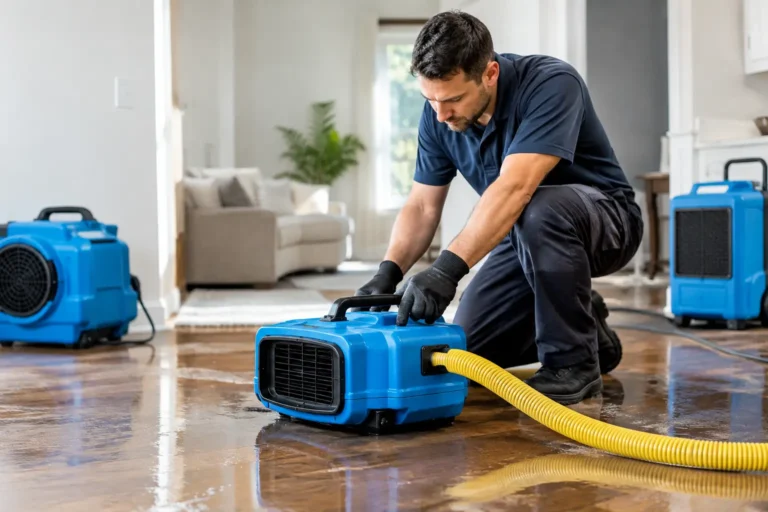
Begin removing standing water and increasing airflow as soon as possible. Fans and dehumidifiers can help with a very small, clean-water incident, but they are not a substitute for proper moisture inspection after a significant leak. Avoid blasting high heat into a wall or ceiling. Rapid, uneven drying can cause materials to warp, and it does not confirm that the cavity is dry.
Document the damage with photos and video before removing materials, especially if you may file an insurance claim. Then arrange a professional assessment. Quick scheduling matters because the first day or two after water exposure often determines whether materials can be preserved.
Why Surface Drying Is Not Enough
A dry-looking wall is not necessarily a dry wall. Paint can trap moisture beneath the surface, and insulation, wood framing, subflooring, and wall cavities can remain damp long after the visible stain disappears.
This is why water damage restoration typically involves moisture mapping, controlled air movement, dehumidification, and repeated monitoring. The process is designed to dry affected materials to an appropriate level, not simply make them feel dry to the touch. When needed, technicians can remove damaged sections cleanly and prepare the area for repair.
For commercial properties, this approach also helps limit disruption. Addressing moisture quickly can reduce the chance of odors, tenant complaints, damaged inventory, or a longer shutdown of an office, retail space, or rental unit.
Protecting Indoor Air Quality During Drying
Water damage can affect more than the wall itself. Damp drywall and insulation may create conditions that worsen indoor air quality, particularly for people with allergies, asthma, or other respiratory sensitivities. Musty odors are a warning sign, but their absence does not guarantee that an area is dry or free of microbial growth.
If mold is visible, avoid disturbing it with aggressive scrubbing or dry sanding. That can spread particles to other parts of the home or building. Containment, proper removal of affected porous materials, and thorough cleaning are often needed to return the space to a clean condition.
DMV Dream Clean provides responsive water damage restoration support for properties in Maryland, Washington DC, and Northern Virginia. An experienced assessment can help you make a practical decision about drying, removal, and the next steps for restoring the affected area.
Do Not Wait for the Stain to Get Worse
A small stain can be the first sign of a larger hidden issue, especially when water has traveled along framing or pooled above a ceiling. The sooner the source is fixed and the moisture is assessed, the more options you may have to save materials and reduce repair costs. When wet drywall is involved, acting quickly is one of the most effective ways to protect your property and the people inside it.