A fireplace can make a home feel warm and comfortable fast, but it can also hide a serious risk if the chimney is neglected. Chimney sweeping safety matters because soot, creosote, blockages, and structural wear can turn a routine fire into a dangerous one. For homeowners, renters, property managers, and business owners, regular chimney care is not just about cleanliness. It is about protecting the people inside the property.
Why chimney sweeping safety matters
When a chimney is used, smoke, gases, and tiny particles travel upward through the flue. Over time, those byproducts leave behind buildup, especially creosote, which is highly flammable. If enough of it collects, a single hot fire can ignite the residue and cause a chimney fire.
That is only part of the concern. A dirty or obstructed chimney can also interfere with airflow. Instead of pushing smoke and combustion gases out, the system may send them back into the room. That creates comfort issues at first, but it can also raise health and safety concerns, especially when carbon monoxide is involved.
This is why chimney maintenance should never be treated as a cosmetic service. A proper sweep helps reduce fire hazards, improves venting, and gives technicians a chance to spot problems early, before they become expensive repairs.
The most common chimney hazards homeowners miss
A lot of chimney problems build up quietly. You may not notice anything wrong until there is a strong smoky smell, poor draft, dark residue around the fireplace opening, or visible debris in the firebox. By then, the issue may already be advanced.
Creosote is the most well-known hazard, but it is not the only one. Animal nests, leaves, broken masonry, moisture damage, and flue liner issues can all affect safe operation. In some homes, the chimney looks fine from the living room, but the interior flue has damage that only shows up during a professional inspection.
Moisture is another overlooked problem. Water entering through a damaged cap, crown, or flashing can weaken masonry and contribute to interior deterioration. That can change how the chimney vents and shorten the life of the system. In other words, chimney safety is not only about what is burned. It is also about how well the structure holds up over time.
Chimney sweeping safety starts before the brush goes in
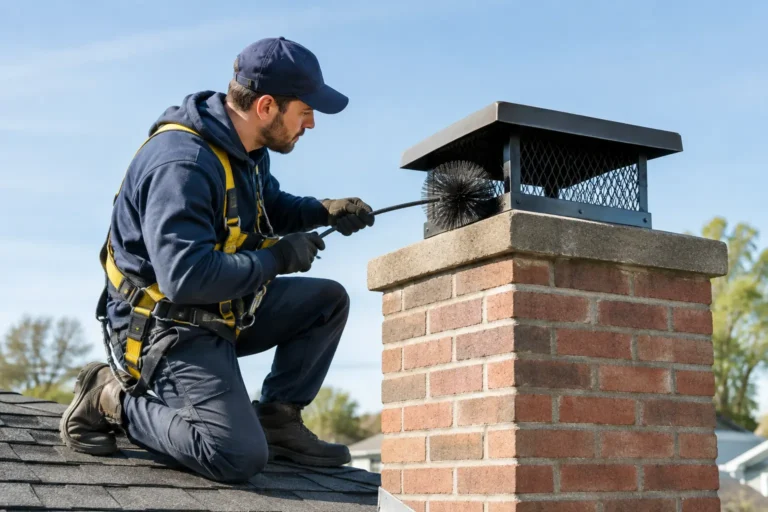
Safe chimney care begins with the right process. A professional sweep should not walk in, run a brush through the flue, and call it done. The job should start with an evaluation of the chimney’s condition, the type of appliance it serves, and any signs of active damage or blockage.
That matters because not every chimney accumulates debris in the same way. A wood-burning fireplace creates different residue than a gas appliance. A chimney used daily in winter may need more attention than one used only a few times a year. The age of the chimney, the liner material, and the overall draft performance all affect the safest cleaning approach.
Containing dust and soot is part of the safety process too. Professional technicians use specialized tools and containment methods to keep debris from spreading through the home or business during the sweep. That protects indoor air quality and helps keep the service clean from start to finish.
Why DIY chimney cleaning can go wrong
It is understandable that some property owners look at chimney cleaning as a weekend task. There are brushes, rods, and kits sold for that reason. But chimney systems are harder to evaluate than they seem, and the biggest risk with DIY work is not just doing the cleaning poorly. It is missing a hidden problem.
A homeowner may remove some loose soot and still leave behind glazed creosote, which is tougher and more dangerous. They may also overlook a partial blockage, a cracked liner, or signs that the chimney is venting improperly. On top of that, working on a roof carries obvious fall risks, especially during cold or wet weather.
There is also the issue of mess and exposure. Soot and debris can spread quickly if the area is not properly sealed and controlled. For households already managing allergies, asthma, or general indoor air quality concerns, that can create another avoidable problem.
How often should a chimney be cleaned?
There is no single answer that fits every property, but annual inspection is a smart baseline. Many chimneys should be inspected once a year and cleaned as needed based on use, fuel type, and residue levels. If you burn wood often during the colder months, more frequent service may be necessary.
What matters most is not guessing. Some chimneys accumulate creosote faster because of the type of firewood used, burning habits, or weak draft. Slow, smoldering fires and unseasoned wood can increase buildup. A rarely used fireplace may still have a blockage from nesting animals or weather-related debris.
For property managers and commercial spaces with active fireplaces or vented heating features, a scheduled maintenance plan often makes the most sense. It helps prevent disruptions and keeps safety from becoming a last-minute issue.
Signs it is time to schedule chimney service
Some warning signs are obvious. Others are easy to dismiss until they get worse. If you notice smoke entering the room, a strong burnt odor after use, black residue near the fireplace opening, or reduced draft, it is time to have the chimney checked.
You should also pay attention to signs outside the chimney itself. Bits of tile or masonry in the firebox, water stains near the chimney, animal sounds, or a chimney cap that looks damaged can all point to larger issues. Even if the fireplace still seems usable, those conditions can affect chimney sweeping safety and overall system performance.
A recent move is another good reason to schedule service. New homeowners often know very little about the previous maintenance history. Starting fresh with an inspection and cleaning gives you a clearer picture of the chimney’s condition.
What professional chimney sweeping should include
A quality chimney service should be thorough, controlled, and focused on both cleanliness and safety. That usually means checking the accessible parts of the chimney system, identifying buildup, removing soot and creosote as needed, and looking for visible signs of damage or obstruction.
Good service also includes clear communication. If there is a blockage, a damaged liner, moisture intrusion, or another safety issue, you should hear about it in plain language. Customers should know what was cleaned, what was found, and whether any follow-up work is recommended.
That practical approach is what many local customers want most. They do not need a complicated lecture. They need straightforward answers, professional work, and confidence that the chimney is safer to use after the appointment than it was before.
Chimney sweeping safety and indoor air quality
Many people think of chimney service mainly as fire prevention, and that is fair. But airflow and air quality matter too. When a chimney is dirty or restricted, smoke and fine particles may not exit the way they should. That can leave lingering odors, irritate the air indoors, and reduce comfort in the home.
For families with children, older adults, or anyone sensitive to airborne irritants, those effects are more than a nuisance. They can make the living space feel less healthy overall. Keeping the chimney clean supports better venting, and better venting supports a cleaner indoor environment.
That connection is one reason full-service cleaning companies are often a smart choice for maintenance-minded customers. If your property needs attention in more than one area, it helps to work with a provider that understands both safety systems and indoor air quality, like DMV Dream Clean.
Choosing the right chimney service company
Not every cleaning company handles chimney work with the same level of care. When comparing providers, look for experience, clear scheduling, professional communication, and a service process that treats safety as the priority, not an upsell.
A dependable company should make it easy to ask questions, book service, and understand what you are paying for. Fast response times matter, but so does doing the job correctly. The best outcome is not just a cleaner chimney. It is peace of mind that your home or business is better protected.
If you use your fireplace regularly, have noticed warning signs, or simply cannot remember the last inspection, now is a good time to address it. A clean chimney supports safer fires, cleaner airflow, and fewer surprises when the season changes. Taking care of it before there is a problem is usually the easier and more affordable move.