A sofa can look clean at a glance while quietly holding crumbs, pet hair, body oils, dust, and allergens deep in its fabric. Learning how to maintain clean upholstery is less about constantly scrubbing your furniture and more about using the right habits before ordinary use turns into permanent stains, odors, or worn-looking fabric.
For households, rental properties, offices, waiting rooms, and other customer-facing spaces, upholstery care protects more than appearance. Clean furniture helps create a more comfortable indoor environment, extends the life of expensive pieces, and makes a room feel cared for from the moment someone walks in.
Start With the Fabric Care Tag
Before using any cleaner, find the manufacturer’s care code. It is usually located beneath a cushion, along the frame, or under the furniture piece. This small tag can prevent a costly mistake.
A code marked W generally allows water-based cleaners. S means the fabric requires a solvent-based cleaner, while WS can usually be cleaned with either method. An X code means vacuuming or professional cleaning only. These labels are not suggestions. Using water on an S-coded fabric, for example, can leave water rings, cause color bleeding, or damage the texture.
If the label is missing, test any cleaning method on a hidden area first. Use only a small amount of product and allow the spot to dry completely before treating a visible section. When the fabric is delicate, vintage, silk-like, suede, or heavily stained, professional service is usually the safer choice.
Keep Dirt From Settling Into the Fibers
The easiest upholstery cleaning job is the one you prevent. Dust and dry soil may seem harmless, but they work their way into fabric with everyday sitting, rubbing, and movement. Over time, that buildup can make upholstery look dull and feel rough.
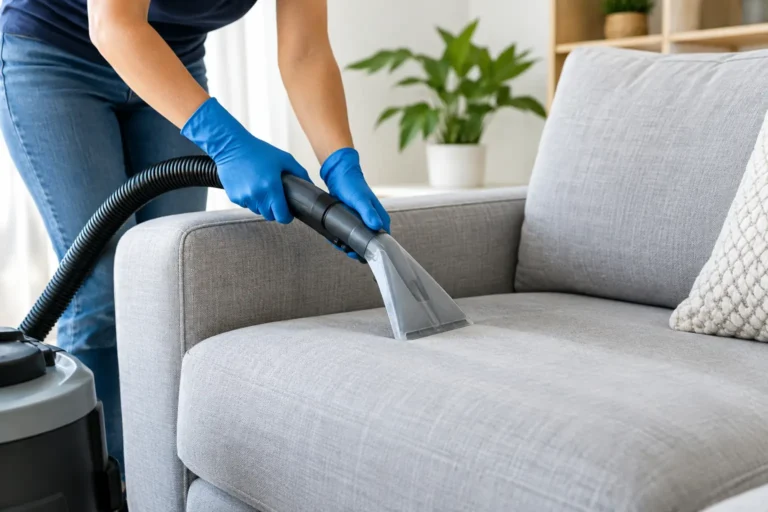
Vacuum upholstered furniture weekly in active households and at least every two weeks in lower-traffic spaces. Use an upholstery attachment to reach the seat, back, arms, seams, and crevices. Take cushions off when possible. The spaces underneath are where food particles, pet hair, dust, and loose debris tend to collect.
For business spaces, include chairs, booths, lobby seating, and upholstered partitions in the regular cleaning schedule. These items receive frequent contact and can develop noticeable darkening on armrests, headrests, and seat edges. Routine vacuuming keeps soil from becoming embedded and helps professional deep cleaning produce better results later.
Handle Spills Quickly, but Do Not Rub
A fresh spill is manageable. A spill that has been pushed deeper into the fabric becomes a stain. The first response matters more than the amount of cleaner you use.
Blot liquid immediately with a clean, white absorbent cloth or paper towel. Press gently from the outside of the spill toward the center to limit spreading. Avoid rubbing, even when the stain is frustrating. Rubbing can drive the spill into the padding, distort the fibers, and create a larger discolored area.
For a water-safe fabric, use a small amount of the appropriate upholstery cleaner on a cloth rather than pouring it directly onto the furniture. Work in light passes and blot away moisture as you go. Too much water can leave rings, encourage odors, and increase drying time.
Food, coffee, wine, ink, grease, and pet accidents all behave differently. Grease often needs a different treatment than a water-based spill, and pet accidents require attention to both the visible spot and the odor source. If a stain remains after a careful first attempt, stop before trying multiple household products. Mixing cleaners can set the stain, bleach the color, or leave a residue that attracts more dirt.
Protect the Areas That Get the Most Use
The favorite seat on the couch usually tells the story first. Body oils, hair products, skin contact, and repeated friction can darken armrests, cushions, and headrests long before the rest of the piece appears dirty.
Rotate and flip removable cushions according to the manufacturer’s instructions. This helps distribute wear and prevents one side from becoming compressed or faded. Straighten loose cushions regularly so they maintain their shape, and keep pets off furniture when possible or use washable throws in the areas they use most.
Sunlight is another factor. Direct UV exposure can fade fabric and weaken fibers over time. Closing blinds during the strongest part of the day, rearranging furniture, or using appropriate window coverings can preserve the color of upholstered seating, especially near large windows.
Use Household Products With Caution
DIY upholstery care has limits. Dish soap, baking soda, vinegar, peroxide, and store-bought spot removers are often treated as universal answers, but the correct product depends on the fabric and the stain. A solution that works well on a durable synthetic couch may damage natural fibers or leave a visible mark on a delicate chair.
Avoid saturating upholstery with homemade mixtures or using a rented machine without confirming that the fabric can handle water extraction. Excess moisture can soak into the cushion filling and foam, where it takes longer to dry. That can lead to lingering odors and, in some cases, mold or mildew concerns.
Also be cautious with deodorizing sprays. They may cover an odor temporarily without removing the source. If a couch smells musty, smoky, or like pets, the odor may be below the surface and require deeper treatment.
Build a Schedule That Matches Your Space
How often upholstery needs attention depends on how it is used. A formal chair in a low-traffic room may only need routine vacuuming and occasional professional cleaning. A family sectional with children and pets needs more frequent care. Restaurants, offices, rental turnovers, and waiting areas may require scheduled service to keep seating presentable and hygienic.
A practical maintenance routine includes four habits:
- Vacuum fabric seating weekly or every other week.
- Blot spills as soon as they happen and follow the care code.
- Rotate cushions and clean high-contact areas regularly.
- Arrange professional upholstery cleaning when buildup, odors, or stains cannot be safely removed at home.
For many homes, professional cleaning every 12 to 18 months is a reasonable baseline. Homes with pets, allergy concerns, smokers, frequent entertaining, or young children may benefit from more frequent service. Commercial settings often need a schedule based on foot traffic and the appearance standards of the business.
Know When Deep Cleaning Is the Better Option
Surface cleaning is valuable, but it cannot always remove what has collected below the visible fabric. It is time to call for professional upholstery cleaning when furniture has persistent odors, widespread staining, darkened armrests, sticky residue, pet accidents, water spots, or allergy-related dust buildup.
Professional technicians can assess the upholstery type, soil level, stain conditions, and moisture needs before choosing a method. That is especially helpful for sectional sofas, dining chairs, upholstered headboards, office seating, delicate fabrics, and furniture that has been cleaned unsuccessfully in the past.
A proper service should focus on removing embedded soil while protecting the fabric and allowing adequate drying. The lowest-cost option is not always the best value if it leaves furniture overly wet, fails to address odor sources, or uses an unsuitable cleaning approach. Ask what method is recommended for your fabric and what drying time to expect.
For property managers and business owners, scheduled upholstery service can also reduce last-minute cleaning pressure before inspections, tenant move-ins, events, or client visits. DMV Dream Clean provides specialized cleaning for upholstery and other high-use surfaces, helping local properties maintain a cleaner, healthier appearance without adding another complicated task to the maintenance list.
Keep Clean Upholstery Clean After Service
After a professional cleaning, give the furniture time to dry fully before heavy use. Keep cushions separated if the technician recommends it, improve airflow in the room, and avoid placing blankets or covers over damp fabric. Once dry, return to regular vacuuming and quick spill response instead of waiting for visible dirt to return.
Clean upholstery is built through small, consistent decisions: remove dry debris, act quickly when spills occur, respect the fabric’s care requirements, and bring in experienced help when the problem is deeper than a surface spot. A little routine care keeps the furniture you use every day looking welcoming and ready for the people who rely on it.