A burst supply line under the sink can soak cabinets, flooring, drywall, and nearby rooms long before the visible puddle looks serious. Understanding water mitigation vs restoration helps you make the right call quickly: one service stops the damage from getting worse, while the other repairs what the water has already damaged.
For homeowners, renters, property managers, and business owners, the distinction matters because delays can raise repair costs, disrupt daily life, and create conditions for mold growth. A dependable water damage team can assess the situation, begin emergency drying, and explain what needs to happen next without making a stressful situation more confusing.
Water Mitigation vs Restoration: The Main Difference
Water mitigation is the immediate response to water intrusion. Its purpose is to limit further damage, remove moisture, protect unaffected areas, and stabilize the property. Think of it as the emergency phase after a pipe leak, appliance overflow, roof leak, sewage backup, or flooding event.
Water restoration happens after the property is stabilized and dry. It focuses on repairing, replacing, and returning damaged parts of the building to a safe, usable condition. Restoration may include rebuilding drywall, replacing flooring, repairing baseboards, repainting, or restoring damaged contents.
The two services work together, but they are not interchangeable. Restoration without proper mitigation can trap moisture behind new materials and create larger problems later. Mitigation without restoration may leave a property dry but unfinished, with damaged walls, floors, or fixtures still needing attention.
Water mitigation is about controlling the emergency
The first priority is finding and stopping the source of water when possible. If a supply line is still leaking, a technician may recommend turning off the water or contacting a plumber before drying can begin. Once the source is controlled, mitigation work typically centers on water extraction, moisture inspection, drying, and cleaning.
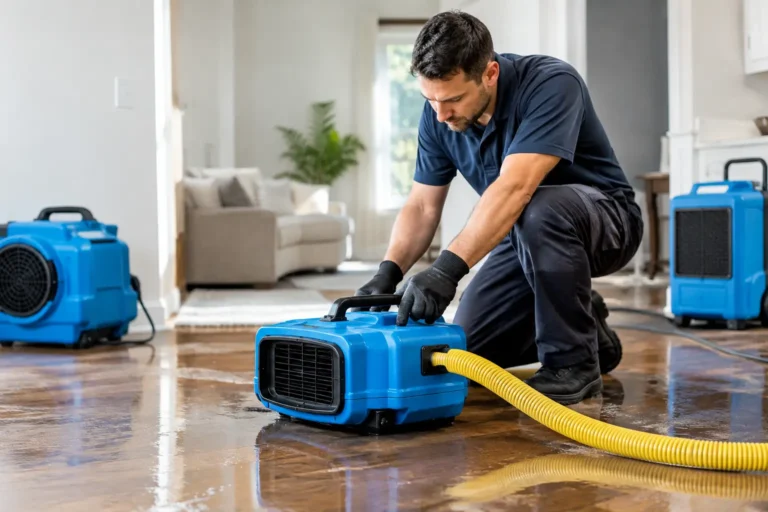
Professional equipment makes a real difference here. High-powered extractors remove standing water from carpet and flooring. Air movers increase evaporation, while commercial dehumidifiers pull moisture from the air and building materials. Moisture meters and thermal imaging tools can help identify hidden water in walls, ceilings, subfloors, and cabinetry.
The goal is not simply to make the room look dry. Materials must reach appropriate moisture levels before repairs begin. A carpet can feel dry on top while the pad and subfloor beneath it remain wet. Drywall may look normal while water has traveled behind it from a leak in an adjacent room.
Restoration is about repairing the property
Once drying is complete, restoration addresses the physical damage left behind. In a minor clean-water leak caught early, restoration may be limited to reinstalling baseboards, touching up paint, or replacing a small section of flooring. In a more severe event, it can involve removing damaged drywall, replacing insulation, rebuilding cabinets, and repairing structural finishes.
The scope depends on what was affected, how long materials were wet, and the type of water involved. Clean water from a broken supply line is generally less hazardous than gray water from an appliance discharge or contaminated water from a sewage backup. Contaminated water often requires more extensive removal and sanitizing because porous materials may not be safe to keep.
What Happens During Water Mitigation?
A professional mitigation process should be organized, responsive, and focused on protecting your property. The exact steps vary by situation, but the work generally begins with an inspection to identify the source, affected areas, and level of contamination.
Technicians then remove standing water and move or protect salvageable contents. This can include furniture, rugs, electronics, and inventory in a commercial setting. Wet materials such as carpet padding, insulation, or swollen particleboard cabinets may need to be removed if they cannot be dried safely.
Next comes controlled drying. Equipment is placed based on room size, material type, humidity, and moisture readings, not guesswork. The crew should monitor the drying process and adjust equipment as conditions change. This approach helps prevent hidden moisture from becoming a mold, odor, or structural issue.
Cleaning and sanitizing may also be part of mitigation, especially after toilet overflows, sewage backups, groundwater intrusion, or leaks involving dirty water. The right cleaning method depends on the water category and the materials affected. Safety comes before saving a material that may no longer be sanitary.
What Happens During Water Restoration?
Restoration starts when the affected area is dry, clean, and ready for repair. It is the phase that makes the space look and function like it did before the damage, or as close to it as practical.
Common restoration work includes replacing drywall and insulation, reinstalling trim, repairing ceilings, replacing carpet or flooring, painting, and addressing damaged cabinetry. For businesses, the work may also involve restoring work areas, customer-facing spaces, storage rooms, and other essential areas so operations can resume safely.
Not every water damage job needs major reconstruction. A small leak discovered quickly may only require extraction, drying, and minor cosmetic work. On the other hand, a slow leak behind a wall may create more restoration needs than a larger spill that was cleaned up immediately. The amount of visible water does not always tell the whole story.
Why Fast Mitigation Usually Saves Money
Water follows the path of least resistance. It can move beneath flooring, soak insulation, wick up drywall, and travel through ceiling cavities. The longer it remains, the more materials it can affect.
Fast mitigation can reduce the need for demolition and replacement. For example, drying a wet hardwood floor promptly may help preserve it, while leaving it wet for days can lead to cupping, buckling, or permanent staining. Drying a small area of drywall early may avoid a larger removal project later.
Speed also helps limit business interruption. A retail shop, office, restaurant, or rental property may face lost income or tenant disruption when water damage closes off usable space. A quick response helps contain the affected area and gives property stakeholders a clearer plan for reopening or completing repairs.
That said, rushing the restoration phase can create problems. Repairs should not begin until moisture readings show that affected materials are adequately dry. Covering damp walls with new drywall or installing flooring over a wet subfloor can lead to odors, material failure, and costly rework.
When You Need Mitigation, Restoration, or Both
Most significant water events need mitigation first and restoration second. A pipe burst, flooded basement, major appliance leak, roof leak, or toilet overflow usually requires immediate water removal and drying before anyone can determine the full repair scope.
You may need mitigation only when the water is caught early and dries without permanent material damage. For instance, a small amount of clean water on a tile floor may be extracted and dried with no repairs needed. You may need restoration only if a past leak was already dried but left damaged drywall, flooring, or finishes behind.
In many real situations, both services are necessary. The key is to avoid assuming that a mop, fan, or surface cleaning has solved the problem. If water reached carpet padding, baseboards, wall cavities, ceilings, or wood flooring, a professional moisture assessment can provide peace of mind and a practical next step.
What to Do While You Wait for Help
If it is safe to do so, stop the water source and move valuables away from the affected area. Turn off electricity to the affected area only if you can do it safely and without entering standing water. Avoid using household vacuums on wet floors, and do not run HVAC equipment if contaminated water may have reached ducts or vents.
Take photos of the damage before moving items, especially if you plan to file an insurance claim. Then contact a qualified water damage professional as soon as possible. Clear communication about the source of water, when the leak started, and which rooms are affected helps the response team arrive prepared.
For properties in Maryland, Washington, DC, and Northern Virginia, DMV Dream Clean provides responsive water damage restoration support designed to help protect your space, improve indoor safety, and move the recovery process forward with confidence.
The best next move after water damage is rarely to wait and see. Address the moisture first, verify that the area is truly dry, and then make repairs with a clear understanding of what your property needs.